
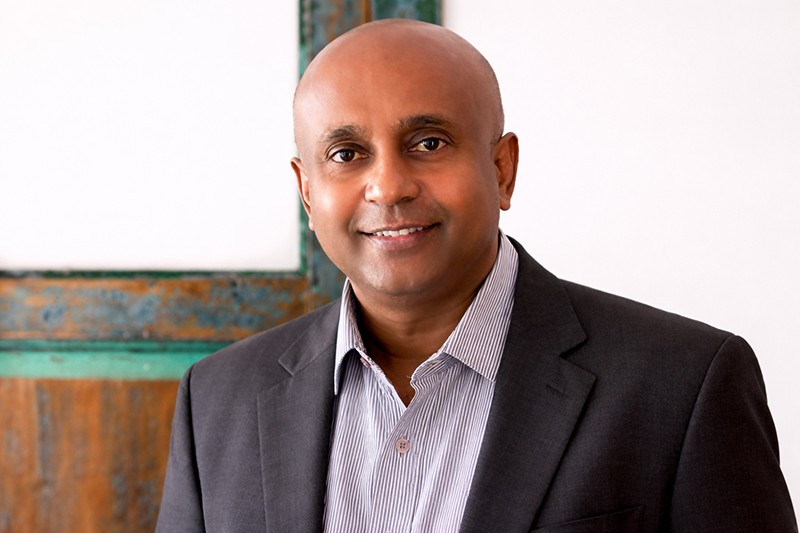
IBNS-CMEDIA: India Vision Institute CEO and veteran museum expert Vinod Daniel speaks to IBNS correspondent Supriyo Hazra on the Indian Conservation Fellowship Program, gaps in conservation, and the future of museums in India.
Excerpts:
Tell us about the Indian Conservation Fellowship Program (ICFP) and its benefits
It’s a privilege to be in Kolkata at the Kolkata Centre for Creativity. ICFP was designed to bring together conservation professionals to the Metropolitan Museum in New York and SRAL in Maastricht. We selected 55 professionals who were engaged in cultural conservation. They spent three to six months at these institutions, where they enhanced their skills in preservation. The idea was to build a strong cohort of experts who can not only shape the future of conservation in India but also train the next generation. ICFP was supported by the Mellon Foundation in the US, with the Metropolitan Museum and SRAL. I program-managed the initiative.
What brings you to Kolkata this time?
An event at the Kolkata Centre for Creativity is bringing together the conservators who were part of the ICFP program.It is wonderful to note that the Emami Foundation has established a new conservation centre. The ICFP program would assist in strengthening this centre.Over the past decade, we’ve worked with institutions across India—from the National Museum and CSMVS to the Indian Museum, MAP Bengaluru, and the Napier Museum. Such initiatives give conservation labs visibility and connect them with leading professionals nationwide.
Why are such programs crucial for the future of museums?
Preservation is at the core of any museum’s role. Museums collect, exhibit, and research, but safeguarding collections is fundamental. India has over 1,000 museums and vast collections outside them—in temples, trusts, and private hands. In fact, less than 10% of collections may be in museums. These objects deteriorate over time, so scientific conservation is essential to maintain their originality. India may need as many as 10,000 trained conservators. Currently, we have fewer than 300 well-trained professionals and about 700 with limited training. That’s a massive gap we must address.
What makes conservation more challenging in India?
The biggest challenge is the shortage of skilled professionals. Conservation hasn’t received the priority it deserves. Restoring paintings can take upto two years. While funding is an issue, the real constraint is the lack of expertise. Institutions must also prioritise conservation without compromising the originality of objects.
How do you see the future of museums, especially in India?
In developed regions like Europe and North America, museums are well established. But countries like India are witnessing a museum boom.What’s encouraging is the rise of private museums alongside government initiatives. In many developed countries, private museums outnumber government ones.Funding models are also evolving, with greater reliance on private support. This pushes museums to innovate and attract audiences. However, the biggest need remains skilled human resources—across conservation, curation, and exhibition design. India currently has only one degree-level conservation program, in Delhi. Ideally, every state should have one. We also need more high-end conservation labs, but infrastructure must go hand in hand with trained professionals.
How has the Indian government contributed in recent years?
The government has played a key role through institutions like the National Museum Institute and the National Research Laboratory for Conservation in Lucknow under the ASI. But we need to scale up. Universities should introduce more conservation programs, and private investment must increase. In many Western countries, only about one-third of museums and conservators are government-supported—the rest operate privately, which strengthens the ecosystem.
What role should experts play in protecting heritage during conflicts?
International frameworks like the Hague Convention exist to prevent destruction, and countries must respect them. However, conflicts still cause damage. One key lesson from regions like Iraq and Syria is the importance of documentation. Proper records help trace stolen objects and prevent illegal trafficking. Once stability returns, conservation can address damage caused by war or neglect. But the first step is always thorough documentation to ensure heritage does not fall into the wrong hands.