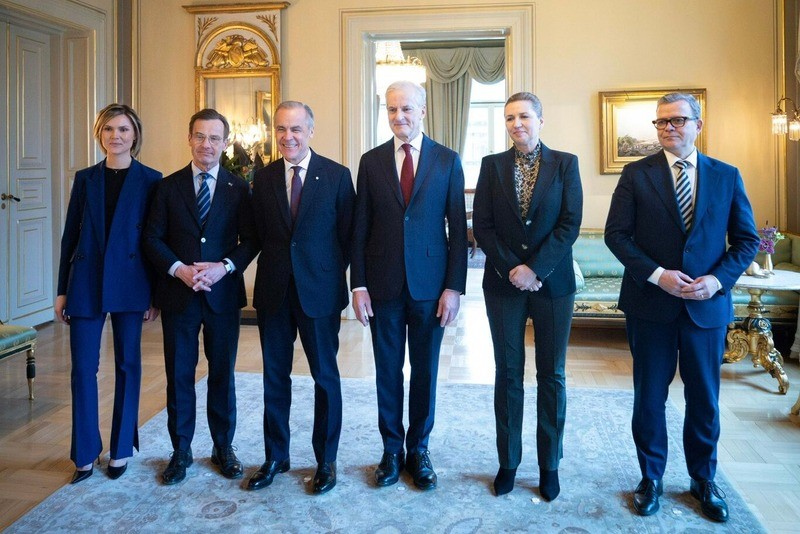
Sweden/IBNS-CMEDIA: Canada, along with six allied nations, pledged on Friday to increase their military presence and economic surveillance in the Arctic, citing rising geopolitical competition from Russia and China.
The joint statement, released by Global Affairs Canada on Friday following security meetings in Helsingborg, outlines plans to expand joint military training, surveillance infrastructure, and defence coordination.
The agreement marks an explicit shift toward Ottawa and its European allies taking on greater financial and strategic responsibility for securing the Arctic corridor.
“With new opportunities opening up and new challenges emerging, close cooperation on Arctic security and economic development among our nations is more important than ever,” the joint statement reads, noting that Canada and Europe are stepping up defence measures to address Russia’s military build-up and China’s “growing strategic interest”.
The multinational coalition, which includes Canada, the United States, Iceland, Norway, Sweden, Finland, and the Kingdom of Denmark, pledged aligned support for several major defence initiatives.
For Canada, this prominently features the ongoing modernisation of the North American Aerospace Defense Command (NORAD), alongside NATO operations such as Forward Land Forces Finland and a new Combined Air Operations Centre in Norway.
Beyond military manoeuvres, the pact binds Canada and its allies to stricter economic defence measures in the North. Government experts from the seven nations have been tasked with coordinating more closely on resource development, standardising foreign investment screening protocols, and protecting critical infrastructure against foreign interference.
The agreement establishes a framework for a deepened, permanent dialogue among the allies to manage security and research protections in the rapidly changing polar region.
(Reporting by Suman Das)