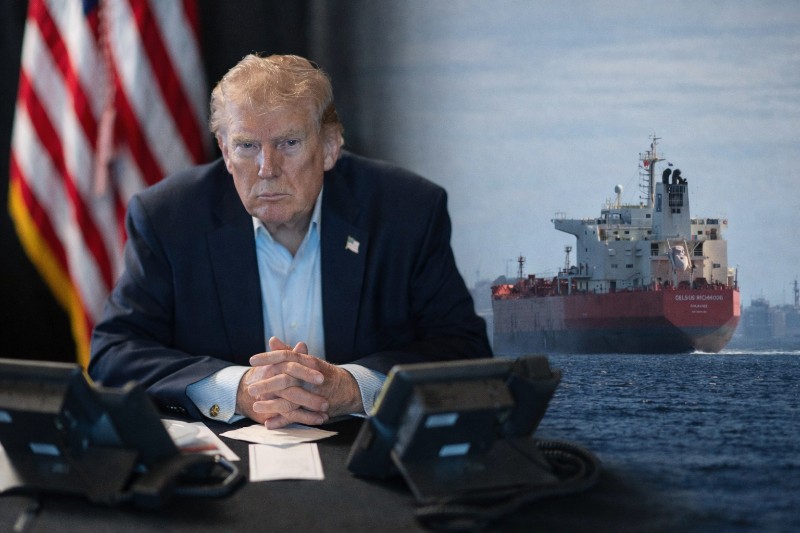
IBNS-CMEDIA: Oil tankers sit idle at anchorage. Traders scramble to price risk. Governments brace for inflationary shockwaves. What looks at first glance like a wartime disruption in the Strait of Hormuz may, according to some analysts, represent something more calculated — the opening move in a broader geopolitical strategy.
Energy economist Anas Alhajji believes the global energy system has entered “uncharted territory” after insurers abruptly withdrew war risk cover for vessels transiting the world’s most critical oil chokepoint.
The immediate effect has been dramatic: shipping activity through Hormuz has slowed to a near standstill, not because of missiles striking tankers, but because financial institutions have pulled the plug.
The consequences are already rippling across oil, gas and commodity markets — and India may find itself particularly exposed.
Financial trigger behind the shipping freeze
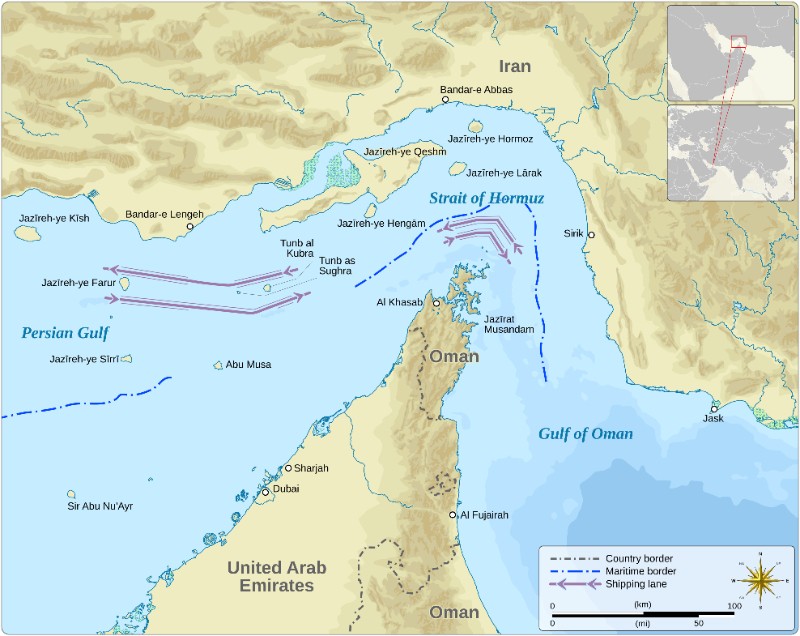
The Strait of Hormuz carries roughly 15 to 20 percent of global oil supply and about 20 percent of liquefied natural gas shipments. Any disruption here usually conjures images of naval clashes or mined waterways.
This time, the disruption has emerged from the insurance market.
Major European and international insurers have either cancelled war risk coverage for ships entering the strait or raised premiums so steeply that many shipowners have simply refused to sail.
According to Alhajji, the shock came almost overnight and caught markets off guard.
Until Iran directly attacks and sinks a tanker, he argues, the most powerful weapon is not military firepower but financial leverage.
The cancellation of coverage has effectively paralysed shipping without a single vessel necessarily being struck.
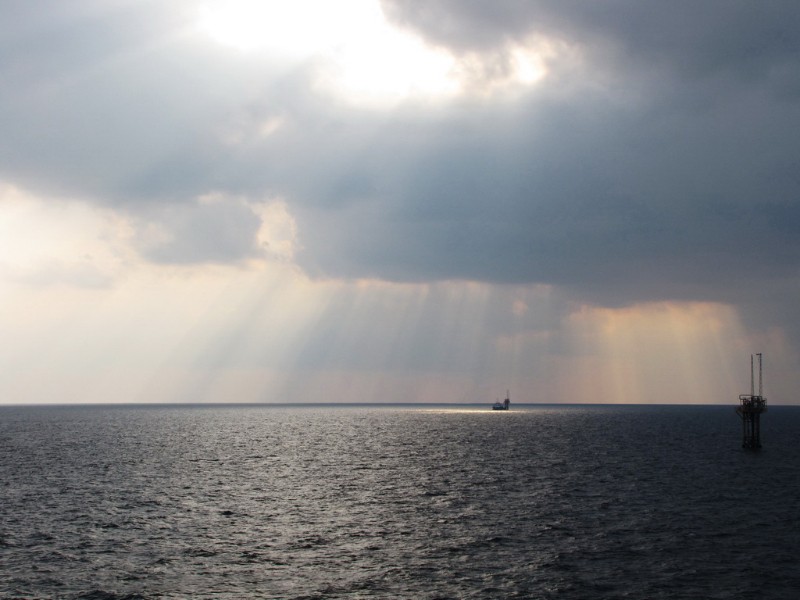 The Strait of Hormuz is vital because roughly 20-25% of global petroleum consumption—about 20 million barrels daily—passes through it. Photo: Wikimedia Commons/Goran_tek-en
Trump’s silence and strategic calculations
Against this backdrop, the response from Donald Trump has drawn attention.
Despite regularly criticising high oil prices, the US president has remained notably quiet about the insurance crisis even as it pushes crude prices higher and disrupts global trade.
Alhajji suggests the silence may signal broader geopolitical objectives.
Trump has floated the idea that the US Navy could escort oil and LNG tankers through Hormuz if tensions escalate further.
Such a move would echo the 1980s “Tanker War” strategy, when American naval forces protected Kuwaiti vessels during the Iran-Iraq conflict.
If Washington implements escorted convoys, it could alter global energy economics in subtle but significant ways.
Military protection may reduce the immediate risk of attack, but it would likely raise transport costs, extend transit times and keep insurance premiums elevated.
In effect, Gulf oil and gas would become structurally more expensive to export.
That shift could enhance the relative competitiveness of US crude and LNG in global markets.
India in the crosshairs?
For emerging economies, the disruption is not theoretical. India stands particularly vulnerable.
Around a quarter of India’s fertiliser imports pass through the Strait of Hormuz.
The country’s fertiliser industry depends heavily on imported Gulf gas and oil, especially LNG supplies from Qatar.
As shipments tighten, Indian authorities have already instructed fertiliser producers to cut natural gas consumption.
The timing compounds the risk. The disruption coincides with India’s crucial planting season.
A sustained reduction in fertiliser production could depress agricultural output, potentially forcing New Delhi to increase food imports.
Alhajji warns that such an outcome would align neatly with long-standing US ambitions to expand agricultural exports to India.
If domestic harvests falter, India may have little choice but to turn to overseas suppliers, including American producers.
Wider fallout across emerging markets
The strain extends beyond India. Bangladesh has begun rationing electricity as LNG imports tighten.
Egypt and Jordan have reported disruptions to gas flows from Israel. Several Gulf producers have scaled back output of oil, LNG and petrochemicals amid the uncertainty.
Energy markets are now bracing for prolonged volatility.
Analysts at Citigroup expect Brent crude to trade between 80 and 90 dollars per barrel in the near term if tensions ease within weeks.
Goldman Sachs estimates that oil prices currently include an 18-dollar-per-barrel geopolitical risk premium tied to the crisis. If disruptions prove partial and short-lived, that premium could narrow sharply.
However, consultancy Wood Mackenzie warns that prices could surge beyond 100 dollars per barrel if tanker flows fail to resume swiftly.
Senior refining and oil markets executive Alan Gelder cautions that a prolonged closure of Hormuz threatens a significant share of global oil and LNG supply.
Beyond oil: Economic and political risks
The implications stretch far beyond fuel costs.
Elevated energy prices would intensify inflationary pressures worldwide, strain public finances in importing nations and destabilise fragile economies.
Trade flows are already shifting as buyers and sellers seek alternative routes and suppliers.
Alhajji argues that if the insurance crisis persists and the conflict drags on, the world could face not just an energy crunch but a broader economic and political upheaval.
Energy chokepoints have historically reshaped alliances and domestic politics. Extended disruption could trigger consequences that few policymakers currently anticipate.
The Strait of Hormuz has long symbolised geopolitical vulnerability.
Today, the battleground appears less about naval confrontation and more about financial power and strategic positioning.
Whether this moment marks a temporary shock or a deliberate recalibration of global energy dynamics remains uncertain.
For India and other energy-dependent economies, the stakes could scarcely be higher, according to economists.