Ottawa/IBNS-CMEDIA: Canada on Friday launched consultations on a new national electricity strategy aimed at doubling the country’s power grid capacity by 2050 as it seeks to meet rising energy demand, lower household costs and strengthen energy security.
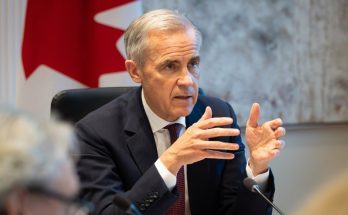
Prime Minister Mark Carney said the plan would focus on expanding clean electricity generation, connecting provincial and territorial grids, training skilled workers, and boosting domestic manufacturing tied to the energy sector.
The government said electricity demand in Canada is expected to double by mid-century as industries and households increasingly shift toward electrification.
Canada currently generates about 80% of its electricity from clean sources and has some of the lowest electricity prices among G7 nations, according to government statement.
The strategy includes consultations with provinces, territories, Indigenous groups, utilities and labour organisations over the coming months to determine how to expand generation and transmission infrastructure while keeping energy affordable.
Officials said the plan could deliver up to C$15 billion ($10.9 billion) in total energy savings by 2050 and reduce overall energy costs for roughly 70% of Canadian households.
The government also said it intends to revise clean electricity regulations to allow continued use of natural gas in order to maintain reliability and affordability during the energy transition.
The strategy envisions major investments in hydroelectric, nuclear, wind and transmission projects, including the Taltson Hydro Expansion in the Northwest Territories, the Darlington New Nuclear Project in Ontario and the North Coast Transmission Line in British Columbia.
Ottawa said the transition would require more than 130,000 skilled workers by 2050 and would include measures to expand domestic manufacturing of grid-related technologies and equipment.
The government is also expanding support for home energy retrofits and electric heat pumps as part of broader affordability measures.
(Reporting by Suman Das)