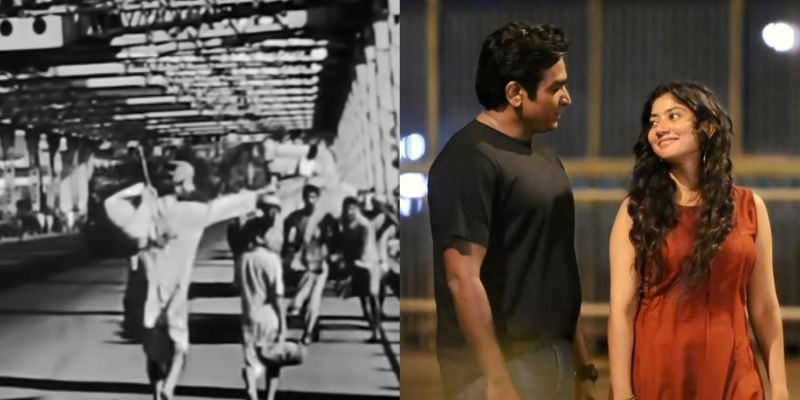
Kolkata/IBNS-CMEDIA: Filmmaker Mani Ratnam recently filmed key scenes for his upcoming untitled Tamil film starring Vijay Sethupathi and Sai Pallavi on Kolkata’s iconic Howrah Bridge, drawing widespread attention after behind-the-scenes photographs leaked online.
The viral images show the lead pair walking across the landmark while filming what appears to be an emotional romantic sequence.
Vijay Sethupathi was seen sporting a striking clean-shaven look, while Sai Pallavi appeared in a flowing maroon dress.
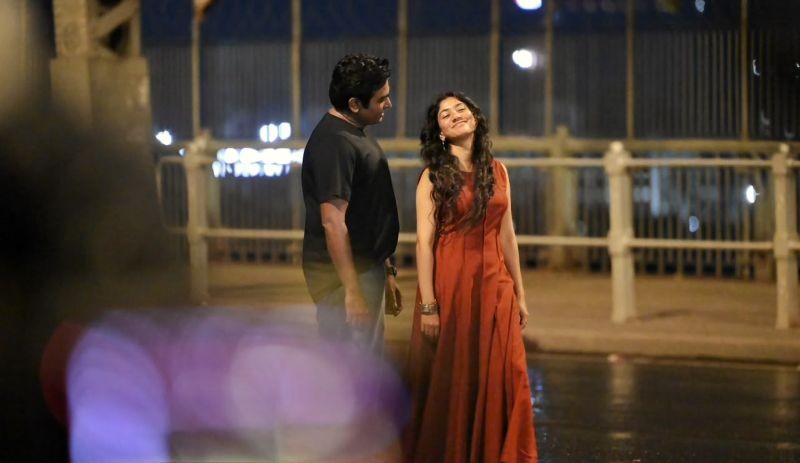 Vijay Sethupathi and Sai Pallavi shooting at Howrah Bridge for their upcoming film directed by Mani Ratnam. Photo: Avishek Mitra/IBNS
Although the makers have kept the story under wraps, the choice of Howrah Bridge as a filming location has sparked speculation that Kolkata will play a significant role in the narrative rather than serving merely as a backdrop.
The leaked visuals quickly went viral on social media, heightening anticipation for Mani Ratnam’s next directorial venture.
The production house has planned a 10-day shooting schedule in Kolkata, with scenes to be filmed at several of the city’s iconic locations, including Kumartuli and the Esplanade Tram Depot, among other landmarks, as Ratnam’s team captures the essence of Kolkata for the film.
Howrah Bridge: A Timeless Cinematic Icon
The Howrah Bridge, officially known as Rabindra Setu, is much more than a transport link connecting Kolkata and Howrah. It is one of Indian cinema’s most enduring visual symbols.
For more than seven decades, filmmakers from Hindi, Bengali, Tamil and international cinema have used the steel cantilever bridge to establish Kolkata’s identity, evoke nostalgia or heighten dramatic moments. With Vijay Sethupathi and Sai Pallavi becoming the latest stars to shoot on the landmark, they join a long list of celebrated actors and filmmakers who have immortalised the bridge on screen.
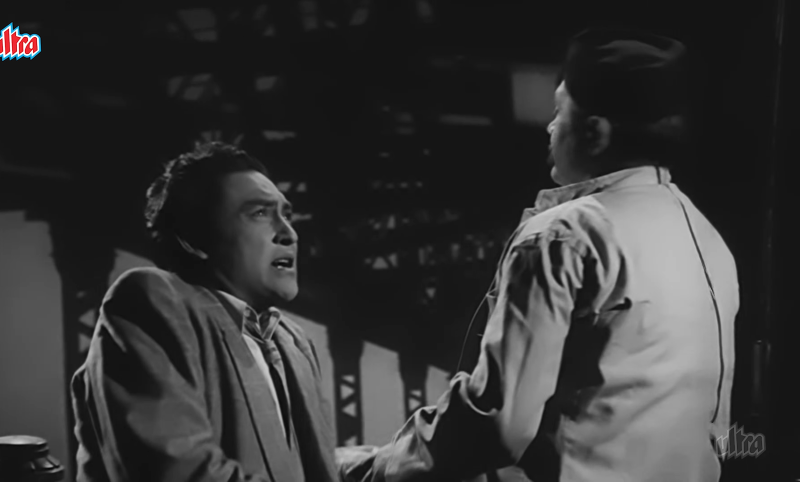 Ashok Kumar (L) in a scene from Howrah Bridge. Photo: Screen-grab
Howrah Bridge (1958)
No film is more closely associated with the landmark than Shakti Samanta’s Howrah Bridge. Starring Ashok Kumar and Madhubala, the crime thriller revolved around a murder mystery set in Calcutta and turned the bridge into a cinematic icon.
Although much of the film was shot on studio sets, the bridge served as its visual identity and gave the film its title. The evergreen songs Mera Naam Chin Chin Chu and Aaiye Meherbaan further cemented the film’s place in Bollywood history.
Do Bigha Zamin (1953)
Bimal Roy’s neo-realist masterpiece featured the bridge as a symbol of an urbanising Calcutta. The imposing steel structure contrasted sharply with the struggles of the rural protagonist, becoming a visual representation of migration, poverty and industrialisation.
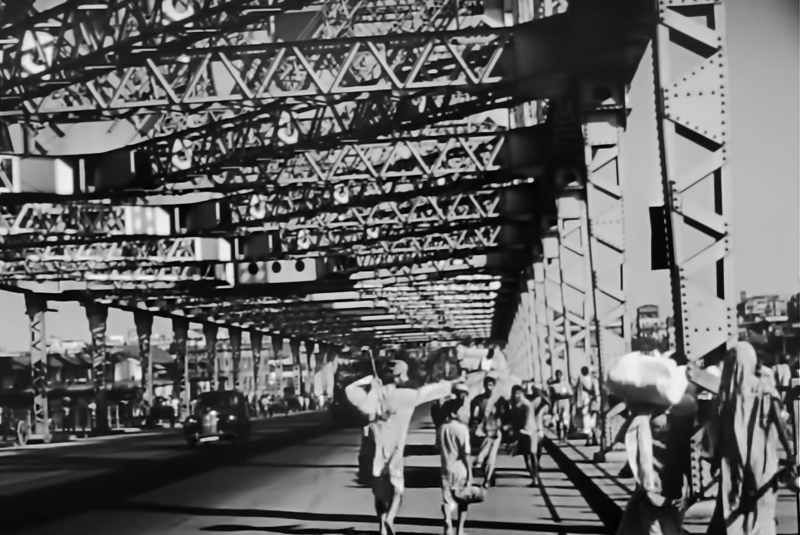 A shot from Do Bigha Zameen. Photo: Screen-grab
Parash Pathar (1958)
Satyajit Ray incorporated Howrah Bridge into his satirical fantasy Parash Pathar. The bridge appears as part of the city’s bustling landscape, reinforcing Ray’s realistic portrayal of Kolkata during the 1950s.
Yuva (2004)
Mani Ratnam made Howrah Bridge a central narrative element in Yuva. The bridge witnessed the film’s defining confrontation and served as the point where the lives of the three protagonists intersected, making it one of the most memorable cinematic uses of the landmark in modern Indian cinema.
More than two decades later, Ratnam has returned to the same location for his latest film starring Vijay Sethupathi and Sai Pallavi.
Parineeta (2005)
Pradeep Sarkar recreated the charm of 1960s Calcutta in Parineeta, with Howrah Bridge frequently appearing in establishing shots. The landmark, along with the Hooghly River, helped recreate the city’s old-world elegance and formed an integral part of the film’s visual language.
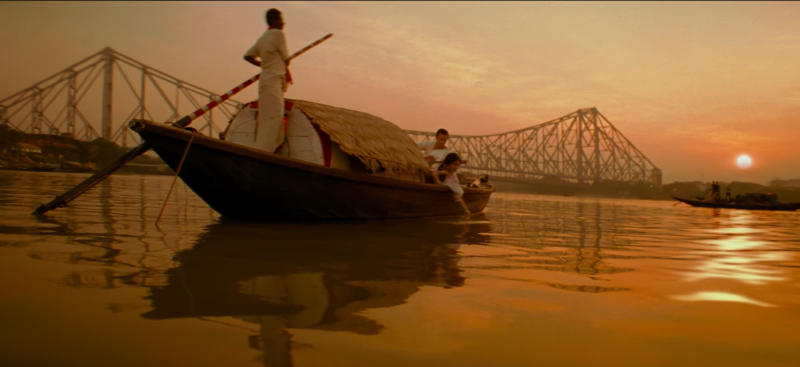 A scene from Parineeta featuring Saif Ali Khan and Vidya Balan. Photo: Screen-grab
The Namesake (2006)
Mira Nair’s adaptation of Jhumpa Lahiri’s novel used Kolkata extensively, with Howrah Bridge featuring among the city’s defining visuals. The bridge became a symbol of home, memory and identity for the Ganguli family as the story moved between India and the United States.
Love Aaj Kal (2009)
Imtiaz Ali’s romantic drama briefly showcased Howrah Bridge during its Kolkata portions. The bridge helped establish the city’s atmosphere while contrasting old-world Kolkata with the modern lifestyles depicted elsewhere in the film.
Kahaani (2012)
Sujoy Ghosh’s critically acclaimed thriller transformed Kolkata into a character in itself. While Durga Puja dominated the film’s visual identity, Howrah Bridge appeared in several establishing shots, reinforcing the city’s unmistakable skyline and adding authenticity to Vidya Balan’s search through Kolkata.
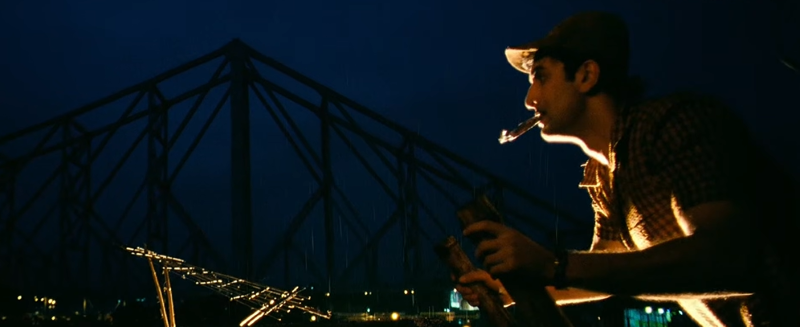 Directed by Anurag Basu, Barfi! featuring Ranbir Kapoor, Priyanka Chopra Jonas (then Priyanka Chopra) and Ileana D’Cruz in the lead. Photo: Screen-grab
Barfi! (2012)
Anurag Basu incorporated the bridge into his nostalgic recreation of old Kolkata. Though it appears briefly, the structure helped establish the period setting and added to the film’s picturesque portrayal of the city.
Gunday (2014)
Ali Abbas Zafar’s action drama, set against the backdrop of Kolkata in the 1970s and 1980s, prominently featured Howrah Bridge. Several action and emotional sequences unfolded around the landmark, while a grand Durga Puja set was reportedly created beneath the bridge to recreate the era’s festive spirit.
Detective Byomkesh Bakshy! (2015)
Dibakar Banerjee’s period detective thriller used Howrah Bridge to transport viewers to 1940s Calcutta. The bridge, alongside several heritage locations, became an essential part of recreating the city’s pre-Independence atmosphere.
Piku (2015)
Shoojit Sircar’s slice-of-life drama concluded with scenes around Howrah Bridge as Amitabh Bachchan’s character returned to his roots in Kolkata. One memorable sequence featured Bachchan cycling near the bridge, highlighting the city’s leisurely pace and emotional significance in the story.
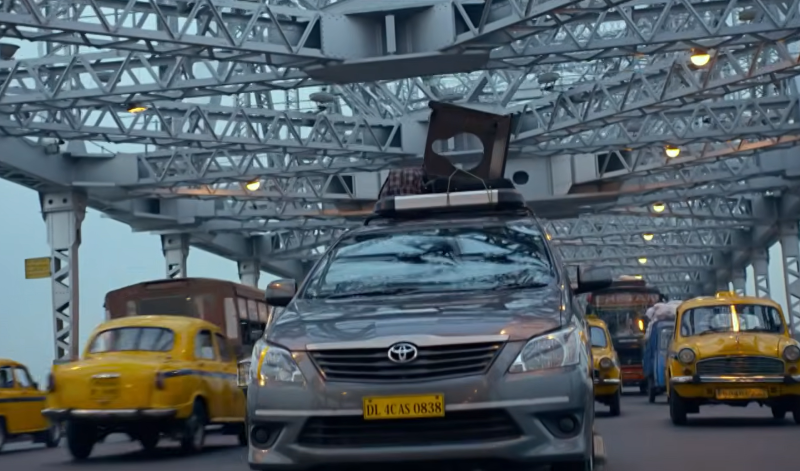 A shot from Shoojit Sircar’s Piku featuring Amitabh Bachchan and Deepika Padukone in the lead. Photo: Screen-grab
International Films
Howrah Bridge has also attracted international filmmakers. It has appeared in Richard Attenborough’s Oscar-winning Gandhi (1982), Roland Joffé’s City of Joy (1992), Garth Davis’ Lion (2016) and several other global productions seeking to capture Kolkata’s distinctive character.
Why Filmmakers Keep Returning
Few landmarks in India are as instantly recognisable as Howrah Bridge. Its massive steel framework, constant flow of commuters, yellow taxis and the Hooghly River create a uniquely cinematic canvas.
Whether used as a symbol of arrival, separation, romance, nostalgia or urban chaos, the bridge has repeatedly helped directors establish Kolkata without a single line of dialogue.
(Photos of Mani Ratnam’s film shooting: Avishek Mitra/IBNS)