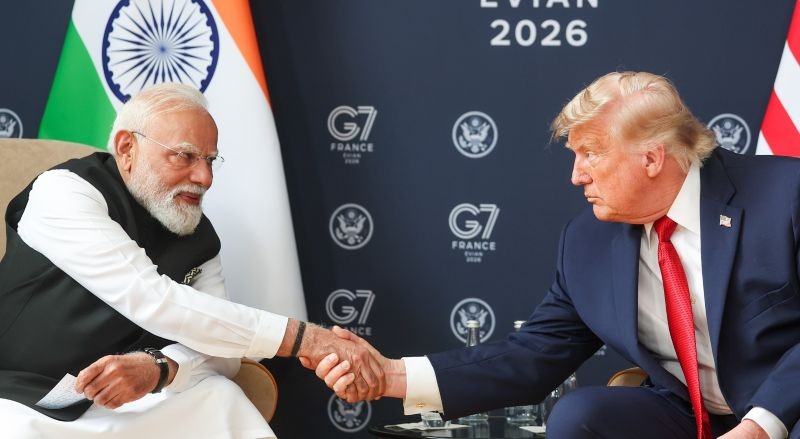
Washington DC/IBNS-CMEDIA: US President Donald Trump on Wednesday commented on the proposed Russia sanctions bill, which has cleared the US Senate and could potentially affect India through a fresh wave of tariffs, media reports said.
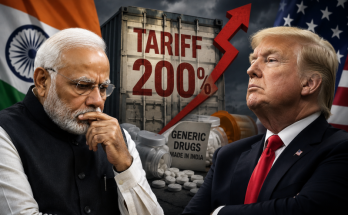
The bipartisan legislation, commonly referred to as the Sanctioning Russia Act, seeks to increase economic pressure on Russia over its war in Ukraine. One of its key provisions would allow the US to impose 100% tariffs on imports from countries that continue purchasing significant volumes of Russian energy, potentially impacting five countries, including India.
Trump’s remarks
Speaking to reporters in the Oval Office, Trump said the bill should be amended to include tariff provisions targeting Iran as well.
“It shouldn’t be necessary, to be honest. But if it’s necessary… I’d like them to add Iran as tariffs, not just as sanctions. I think it’s important,” Trump said.
“That’s what Lindsey wanted, because I heard that they have tariffs on Russia, but not on those five countries with having to do with Iran. I’d like to see tariffs on Iran. It would make it much stronger,” he added.
What is the Russia sanctions bill?
The Russia sanctions bill, widely known as the Sanctioning Russia Act, is a bipartisan proposal in the US Senate aimed at significantly increasing economic pressure on Moscow.
The legislation seeks to curb Russia’s ability to finance its war in Ukraine by targeting its primary source of revenue—exports of oil, natural gas, and other commodities.
A major feature of the bill is the provision for secondary tariffs, allowing the US to impose 100% tariffs on imports from countries that continue to purchase substantial quantities of Russian energy.
How could it affect India?
India has emerged as one of the largest buyers of discounted Russian crude oil since 2022, making it one of the countries that could be affected if the legislation is implemented without exemptions.
Impact on India’s exports
The United States is one of India’s largest export destinations. If a 100% tariff is imposed on Indian goods because of continued purchases of Russian oil:
Indian exports would become significantly more expensive for US buyers.
American importers could shift to suppliers in countries not facing the tariff.
Indian exporters could lose orders and market share.
Sectors that could be affected include:
Pharmaceuticals (subject to possible exemptions)
Textiles and garments
Engineering goods
Auto components
Chemicals
Gems and jewellery
Machinery and industrial products
Impact on jobs
A decline in exports could affect employment in export-oriented industries, particularly textiles, leather, engineering goods, and gems and jewellery, where a large number of jobs depend on overseas demand.
Impact on economic growth
Reduced exports could:
Lower manufacturing output.
Widen the trade imbalance.
Slightly slow India’s economic growth if the tariffs remain in place over an extended period.
Impact on the rupee
If export earnings decline while India continues to spend heavily on oil imports:
Demand for US dollars could increase.
The Indian rupee could come under depreciation pressure.
Imports such as electronics, crude oil, and industrial equipment could become more expensive.