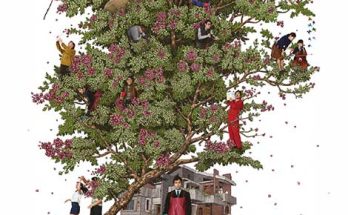
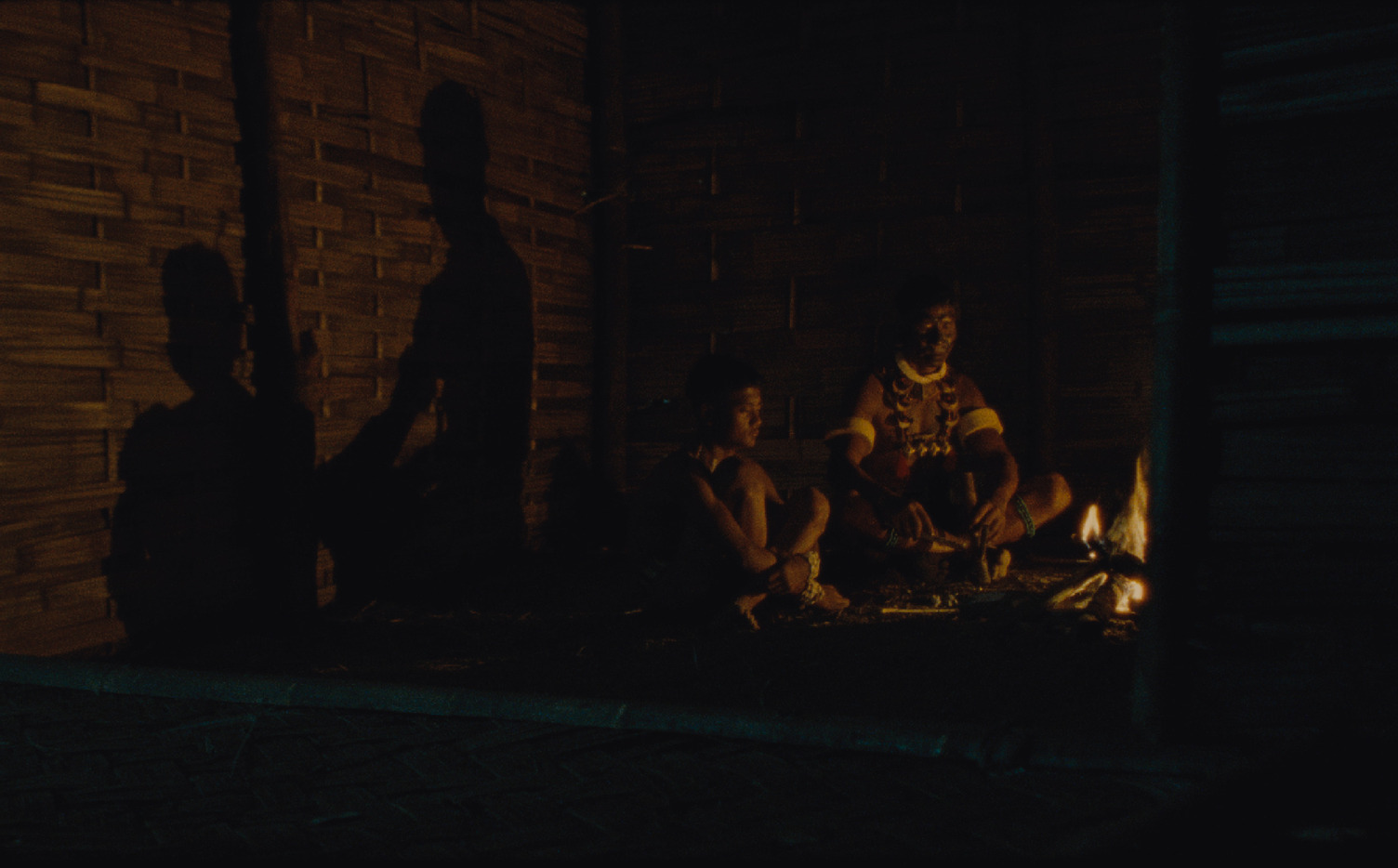
Toronto/CMEDIA: Directed and screenplayed by Theja Rio, TIFF 2026 film ‘Angh’, a breakout Nagaland film was world-premieried in Toronto’s Platform section. As an elegy to the people of Nagaland, India, Angh concerns Anghba (Anghlong Konyak), an aged chief trying to save the slow death of his traditional village at the hands of a patronising white American Baptist missionary (Douglas Henshall). Unlike most films about assimilation, no outward physical violence occurs here. The blows are instead to the spirit – especially when the chief’s mute son Amao (Sobino Rengma) gets infatuated with the new colonising religion. Anghba’s holy battle is a tragic fight against the inevitable.
Asha Bajaj, IBNS-TWF–CMEDIA correspondent on the sidelines of TIFF 2026 in conversation with the director of the film ‘Angh‘ Tejha Rio as he tries to explore the generational gaps observed in ‘Angh’.
To Tejha: This feature is related to your short film ‘Angh’ from 2021. What did the additional running time of a feature allow you to explore or change from that short?
Tejha: I started writing this screenplay for the short film in 2021 and almost immediately I realized that this was something that had feature material that I was trying to encapsulate into a short film. After its release, I was aware that it was supposed to be a feature film. Angh of 2021 fortunately had a very good film festival run and this gave me the confidence and the courage to then expand this piece into a feature.There’s so much complexity that revolves around the conflict and the characters and the world that they inhabit. So a short film was too restrictive in that sense to capture all this cultural specificity and all the the layers that they’re there to explore. So it came right from the beginning. I knew that there was a much larger story that was there to be told.
Why Nagaland is very rarely featured in Indian cinema?
Right from the very beginning, I knew that we wanted to follow the lens of the insider and so very often when you get films made about our region it’s mostly about the explorer not the subject. And we wanted to reverse that gaze in that sense. I felt it’s very always important for me to tell our perspectives through our eyes and through our lens and that is something that we strictly tried to maintain throughout the film and throughout the script.
Why did you want to do a close-up focus on a father and son relationship in that larger context?
There’s something that is very tragic, melancholic and at the same time profound about generational gaps that I always observe in films. And so our people have gone through a very swift transition and we’ve in so many ways culturally de-resonated. In order to explore that, I thought the most authentic and the most organic way of exploring that was through the lens of a father and son. And those are things that are universal as well that is something that everyone is dealing with but especially where we come from. The transition has happened so fast. We’re dealing with all of that, not at the peak of how swift it was, but still dealing with the hangovers of that and the father and son dynamic that emerged most organically.
Can you clarify the nuanced depiction of how this transformation happens and particularly with the son? And how did you want to kind of build that arc out with the son?
He just wants to be more comfortable, wants to be with other children and there’s no dramatic kind of act of betrayal or leaving the community. The arc with the son comes out from what is going on around him rather than him going through that journey on an internal level. For that one has to weigh the pros and cons. Therefore, I try and write something that I’m more conflicted about rather than things that I’m sure about because the depth comes from that. And when it comes to that, there are so many things that obviously Christianity has brought. Christianity is the centre of the people back home. This has given hope and faith and belief to so many people at the same time. And I was quite aware and didn’t make a conscious decision in that sense to maintain the point of neutrality. So it’s a guess that everything that happens around him leaks into Ammo’s arc because we have to consider the generational gap where the father’s thought process is more conservative and is unwilling to change. The boy is presented with having the scenario of much more enjoyable life. I think that comes very naturally. And so, those balances I guess then influence his decisions.
Why did you feel like it was important to connect the story you were telling in the past to the present?
A lot of the times we look back at history merely just as statistics or just numbers. You’ve been through this whole journey with this man and you’ve seen things from his perspectives. But then now looking back as a part of history, it’s merely a skull and as something to learn on. There’s so much to learn from all those excavations and those remains that we find. But it’s strangely very melancholic and tragic because there’s a tendency to completely dehumanize those people and then look at them from an academic perspective. With that self-reflection, I felt it was important to connect the story I was telling in the past to the present