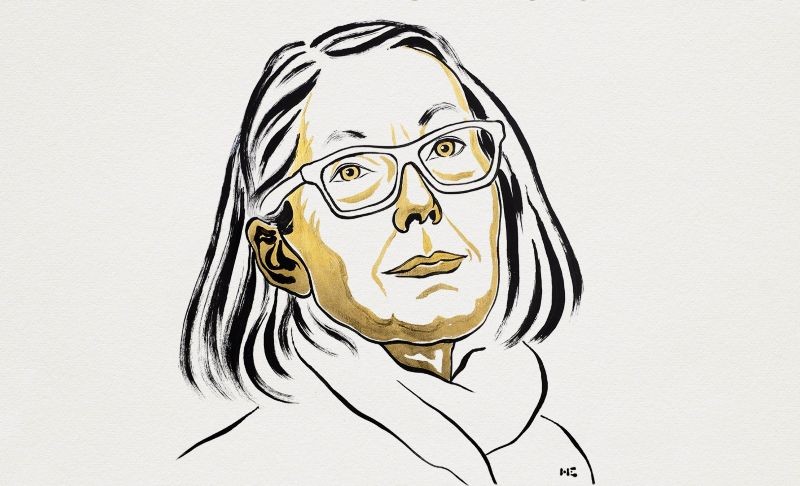
IBNS-CMEDIA: Canadian poet, essayist and translator Anne Carson has been awarded the 2026 Nobel Prize in Literature, the Swedish Academy announced.
Carson, 76, was honoured “for her bold and inventive oeuvre that, in playful dialogue with the classical tradition, has created new forms for contemporary literature.”
In an X post shared by The Nobel Prize, Carson appeared visibly surprised while reacting to the news from her kitchen in Reykjavík, Iceland, where she was busy on a phone call.
Who is Anne Carson?
Carson’s work defies easy categorisation, combining poetry, fiction, essays, classical scholarship, translation and drama.
Ancient Greek literature, particularly the works of poets and playwrights such as Sappho, has been a major influence on her writing. Her works frequently explore themes including love, desire, loss, grief, loneliness, memory and the difficulty of understanding another person.
Her writing is known for bringing classical literature into conversation with contemporary life, often moving between scholarship, poetry and personal reflection.
Just in! New Nobel Prize laureate in literature Anne Carson stands surprised in her kitchen in Reykjavík, Iceland. Stay tuned for our exclusive interview with her coming soon. Join us in congratulating our 2026 literature laureate – send your greetings in the comments. https://t.co/vateXOOBMp
— The Nobel Prize (@NobelPrize) October 8, 2026
Why is Anne Carson famous?
Carson gained widespread recognition with Autobiography of Red (1998), a genre-defying work that reimagines the Greek mythological figure Geryon as a contemporary red-winged boy. The book blends poetry, fiction and mythology.
Another major work is Nox (2010), an experimental elegy for her brother Michael. Designed as a box-like accordion book, it brings together photographs, fragments of writing, translations and memories.
Carson has also received major literary honours, including the Princess of Asturias Award for Literature and a MacArthur Fellowship.
Anne Carson’s distinctive writing style
Carson’s writing is often described as intellectually demanding, fragmented and experimental. Her work can combine classical scholarship with deeply personal observations and unconventional poetic forms.
Themes of love, absence, grief and desire recur throughout her work, with emotions often filtered through mythology, history, philosophy and language.
Rather than following conventional literary forms, Carson frequently moves between genres, making her work difficult to classify but distinctive in contemporary literature.