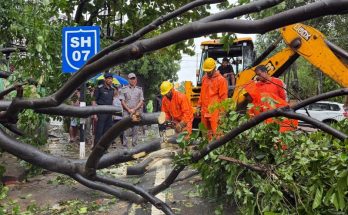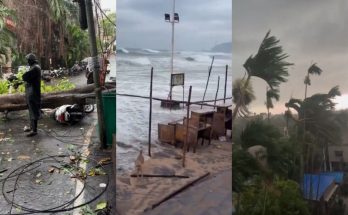
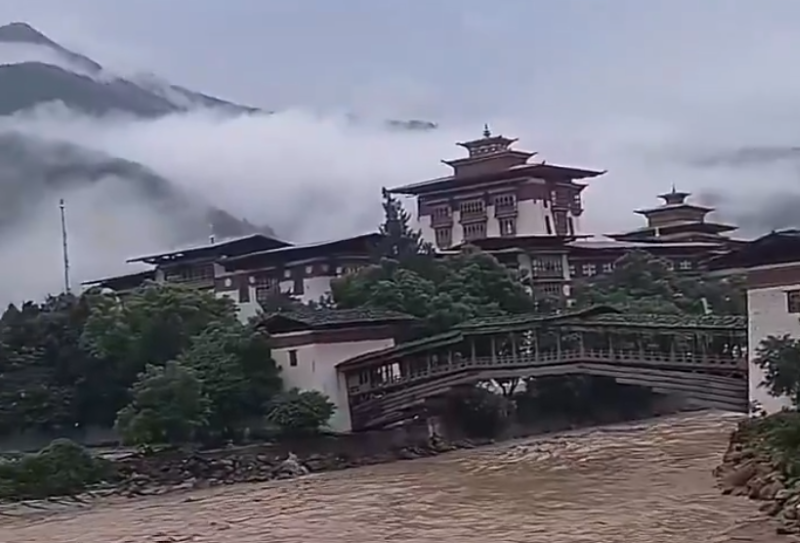
IBNS-CMEDIA: A glacial lake outburst flood (GLOF) in Bhutan has left a section of a highway blocked by debris, cutting off the remote Laya region from the rest of the country, according to media reports.
No casualties have been reported so far.
The incident has raised concerns over possible flash floods in India, prompting authorities to issue alerts in parts of West Bengal and Assam over a potential rise in water levels in the Sankosh River.
The Solar Irrigation Lifting System in Dochhukha-Dzomlingthang-Ritsa Chiwog, under Guma Gewog in Punakha, was partially damaged by the flash flood, India Today reported.
#Monks and local residents were evacuated to safer locations in #Punakha, #Bhutan , following a Glacial Lake Outburst Flood (GLOF)… https://t.co/mF4YeLc1Lx
— Devesh , वनवासी (@Devesh81403955) October 30, 2026
However, the full extent of the damage to the irrigation system remains unclear.
The glacial lake outburst was first reported on Thursday at Bhutan’s Shintaphu Lake in Gasa district.
The lake, considered one of Bhutan’s 17 potentially dangerous glacial lakes, is located in the upper reaches of the Mo Chhu river basin.
The sudden surge of water prompted precautionary evacuations in Bhutan and warnings for communities living along the Sankosh River in neighbouring India, Daily Bhutan reported.
According to the newspaper, a section of the Punakha-Gasa Secondary National Highway has been severely damaged, forcing authorities to close the road.
Following the incident, residents were moved to safer locations and warning sirens were activated.
The damage to the highway has disrupted connectivity to Laya, a remote highland region in northern Bhutan.
In neighbouring West Bengal, several areas, including Cooch Behar, Tufanganj and Basirhat, have been placed on alert over the threat of flooding along the Sankosh River.
Communities along the Brahmaputra river system, particularly in Arunachal Pradesh and Assam, have also been put on alert.
West Bengal Forest Minister and Kumargram MLA Manoj Kumar Oraon has urged residents living along the Sankosh River in Alipurduar district to move to safer locations.
In a video appeal posted on Facebook, the minister asked residents to evacuate as a precautionary measure and cooperate with the administration.
BJP MP from Darjeeling, Raju Bista, also alerted people about the situation in a post on X.
“A glacial lake outburst flood (GLOF) has been reported at Lemthang in Bhutan. The overflowing water from the lake is flowing downwards through the Mofu River towards the Sunkosh River,” he wrote.
He further said, “Therefore, everyone living in the catchment areas of the Sunkosh River and all its connected tributaries have been informed to move to a safe distance immediately to protect their lives.”
“Everyone in our Darjeeling hills, Terai and Dooars region are requested to stay alert,” he added.
What Is a Glacial Lake Outburst Flood (GLOF)?
According to India’s Central Water Commission (CWC), glacial lakes are commonly found at high elevations in glacierised basins.
They are formed when glacial ice, moraines or natural depressions trap and hold water.
These lakes come in different forms, ranging from meltwater ponds on glacier surfaces to large lakes in side valleys dammed by glaciers in the main valley.
Such lakes generally release water through seepage near the retreating glacier. Moraine deposits can create natural depressions where meltwater accumulates, eventually forming glacial lakes.
When these lakes are effectively watertight, water continues to collect until seepage or overflow limits the water level.
Moraine-dammed lakes are among the most common types of glacial lakes.
However, these natural barriers can sometimes become unstable, resulting in the sudden release of large volumes of stored water.
The failure of ice or moraine dams can trigger devastating floods and destruction, with such incidents documented across the world.
Flash floods caused by the sudden outburst of glacial lakes are known as Glacial Lake Outburst Floods (GLOFs).
These floods pose a significant threat to downstream areas, as enormous volumes of water can be released within a very short period, potentially causing widespread destruction.
The consequences of such events are often difficult to predict because of limited data on rainfall intensity, landslide locations, the volume of impounded water and the physical conditions of lakes and other water bodies.
The Central Water Commission has therefore stressed the need for close monitoring of glacial lakes and water bodies across the Himalayan region.