Ottawa/CMEDIA: Canada is reportedly set to become a key and reliable supplier of energy to the G7 .
G7 leaders welcomed Canada’s potential to deliver “significant additional capacity” to global markets to reduce dependence on oil and gas coming through the Strait of Hormuz.
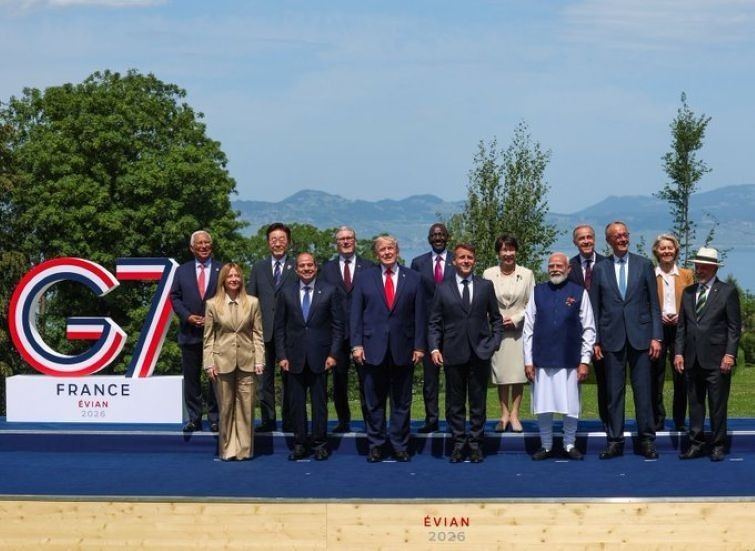
“We commit to accelerate the diversification of energy supply routes in order to reduce global vulnerability to the Strait of Hormuz and to increase our energy stocks…welcome the potential for Canada to deliver significant additional capacity to global markets in the coming years, ” said a joint statement by G7 leaders in Évian-les-Bains, France, on Wednesday.
New partnerships on critical minerals, were announced by Canada’s Prime Minister Mark Carney, that his office said “will unlock more than $5 billion in capital investment for projects across the Canadian critical minerals value chain.”
Carney said in his closing news conference that it’s critical for the global economy to diversify its energy supply routes away from the choke point at the Strait of Hormuz and added,
“One of the points that I made in the room, in our discussions around Iran and geopolitics was: we have to apply the lessons of recent events,” he said.
About 20 percent of the world’s crude oil was shipped from states in the Persian Gulf, through the Strait of Hormuz and into the Gulf of Oman before fanning out to countries around the globe, before the war,
The access point to the Persian GulfIranian attacks on ships carrying energy through the Strait of Hormuz essentially closed , halting most shipments of oil and driving up global energy prices.
The road to more energy
With several major liquefied natural gas projects underway, Carney said that Canada is already “on the path” to increasing its energy production.
Along with increasing the output of the TMX oil pipeline, and the potential of two additional pipelines being built from Western Canada — one going to the U.S. and another to the West Coast — Carney said Canada’s potential to produce energy has been noticed.
“It’s quite substantial and it’s important to our European partners. It’s important to our Asian partners,” Carney said. “It was raised with me on a number of bilaterals as well.”
Beyond energy from Western Canada, Carney said there are “other alternatives in the east” to help diversify the G7 energy supply away from the Persian Gulf.