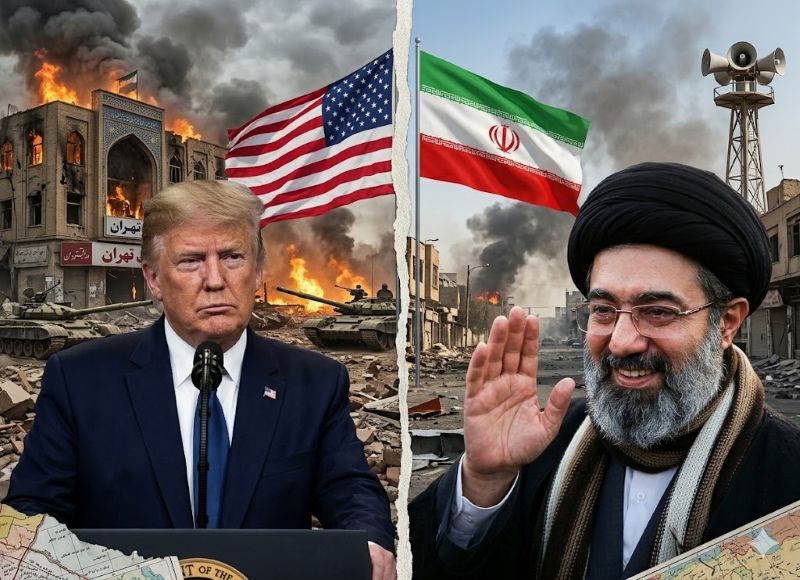
IBNS-CMEDIA: Iran has rejected a US-backed ceasefire proposal, instead submitting a detailed 10-point response calling for a permanent end to the conflict, according to state-run Islamic Republic News Agency (IRNA).
“In this response, set out in ten points, Iran has rejected a ceasefire and insists on the need for a definitive end to the conflict,” IRNA reported.
Tehran conveyed its position to Washington via Pakistan on Monday.
The proposal reportedly includes demands for a complete cessation of hostilities across the region, a framework to ensure safe passage through the Strait of Hormuz, the lifting of sanctions, and commitments toward post-war reconstruction.
US calls proposal ‘significant, but not enough’
US President Donald Trump acknowledged reviewing a 45-day ceasefire proposal, describing it as a “significant step,” though insufficient.
“It’s a significant proposal… but it’s not good enough,” Trump told reporters at the White House, adding that backchannel negotiations through intermediaries were ongoing.
He also struck a harsher tone, warning that Iran would “pay a big price,” signaling continued pressure despite diplomatic exchanges.
Escalating rhetoric over Hormuz
Tensions further escalated after Trump issued a deadline via his platform, Truth Social, demanding Iran reopen the Strait of Hormuz by Tuesday evening.
In a strongly worded post, he threatened to target Iran’s energy infrastructure if the vital shipping route remains blocked.
The warning was reiterated on Monday, even as mediators signaled potential progress toward a negotiated settlement.
Conflict continues amid uncertainty
The exchange underscores the widening gap between Washington’s push for a temporary ceasefire and Tehran’s insistence on a comprehensive resolution to the war.
While diplomatic channels remain open, the sharp rhetoric and competing demands highlight the fragility of ongoing efforts to de-escalate the conflict.