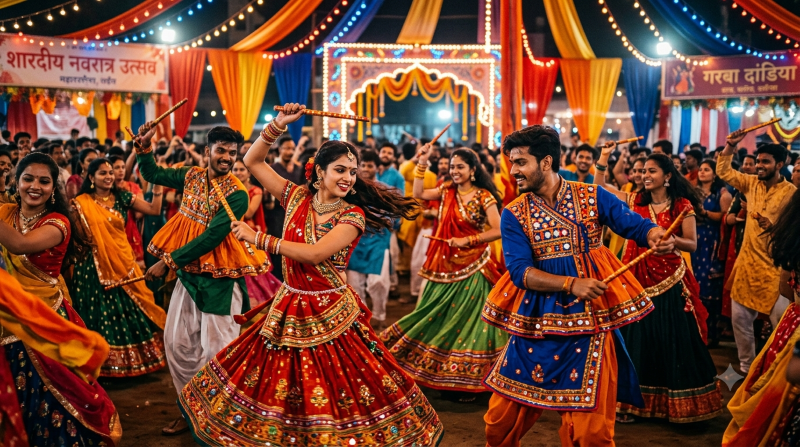
Mumbai/IBNS-CMEDIA: The Vishwa Hindu Parishad (VHP) has unveiled a set of guidelines for organising Garba and Dandiya events during Navratri, including restrictions barring Muslims from participating in the religious celebrations, media reports said.
VHP spokesperson and joint secretary Shriraj Nair said the organisation has decided to bar Muslims from participating in the events, arguing that Navratri is centred on the worship of Hindu goddesses.
VHP cites religious character of Navratri
“Navratri is not just about songs and dance. The festival is about worshipping the Goddess. Why should Muslims, who are against idol worship, participate in the festival?” Nair said, as quoted by WION.
The VHP has also made it mandatory for visitors to produce their Aadhaar cards and wear a tilak on their foreheads as part of its identification measures to establish that they are Hindus.
Nair rejected allegations that the guidelines were directed against any particular community, saying they were aimed at preserving the cultural character of Hindu festivals.
He further suggested that Muslims wishing to participate in Navratri celebrations should organise such events at mosques or near their homes.
Raut questions VHP’s stance
Shiv Sena (UBT) leader Sanjay Raut criticised the VHP’s position and questioned the organisation’s guidelines in light of recent remarks by Rashtriya Swayamsevak Sangh (RSS) chief Mohan Bhagwat on Hindu-Muslim unity and the place of Muslims in India.
Bhagwat, addressing a large gathering at Madison Square Garden in New York recently, delivered an emphatic message on the place of Muslims in India.
Responding to a question he said had been posed to him by Muslims at an earlier lecture — “You are a Hindu organisation, you say Hindu Rashtra, what about us Muslims? Would you drive us out?” — Bhagwat said: “No, that is not Hindutva.”
Bhagwat also said that a Hindu who believes there should be no Muslims in Bharat “will not remain Hindu.”
Raut’s criticism comes amid the debate over the VHP’s guidelines for Garba and Dandiya events and their implications for participation in public religious celebrations.