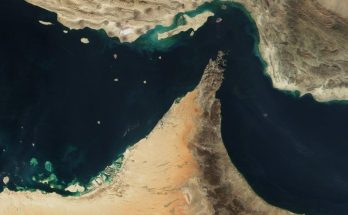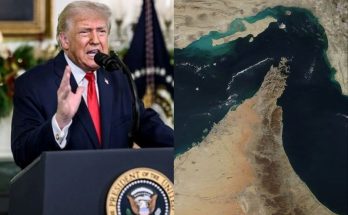
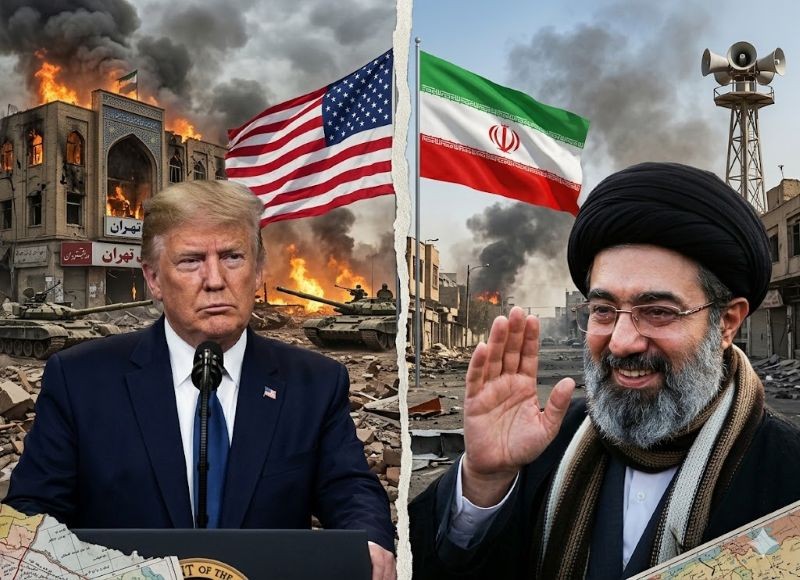
IBNS-CMEDIA: Tensions between the United States and Iran have sharply escalated after US President Donald Trump issued a stark ultimatum demanding the reopening of the Strait of Hormuz, a critical global oil chokepoint.
In a post on Truth Social, Trump warned that Iran has 48 hours to fully restore shipping access to the strait or face severe military consequences.
“If Iran doesn’t FULLY OPEN, WITHOUT THREAT, the Strait of Hormuz… the United States will hit and obliterate their various POWER PLANTS,” Trump said, adding that strikes would begin with Iran’s largest facilities.
Iran responds with counter-threats
Iran swiftly retaliated with its own warning. The country’s military command, Khatam al-Anbiya, said any attack on Iranian energy infrastructure would trigger widespread retaliation against US-linked assets across the region.
“All energy, information technology, and desalination infrastructure belonging to the US and its allies will be targeted,” the command said.
Hormuz closure sparks global alarm
The crisis follows Iran’s partial closure of the Strait of Hormuz after joint US-Israel strikes on Tehran on February 28.
The strait carries around 20% of global oil and LNG supplies. Several nations—including the UK, France, Germany, Italy, South Korea, Australia, the UAE, and Bahrain—have condemned the move.
Oil prices have surged, raising fears of global inflation and supply shocks.
Iranian Parliament Speaker Mohammad-Bagher Ghalibaf warned the situation may not normalize soon: “Even in the best-case scenario, returning to full operations could take months.”
Security experts caution that minefields, unexploded ordnance, and heightened military presence could delay safe navigation even if tensions ease.
Strikes on nuclear sites escalate conflict
The confrontation intensified further after an airstrike hit Iran’s Natanz nuclear enrichment facility for the second time since the conflict began. Iranian authorities said there was no radiation leak, though satellite images showed structural damage.
In retaliation, Iran launched missile strikes targeting Israeli towns including Dimona—home to a nuclear facility—and Arad. Over 100 people were injured in the attacks.
The latest developments mark a dramatic reversal, coming just a day after Trump had indicated interest in “winding down” the conflict.
With both sides issuing direct threats against critical infrastructure, the situation now risks wider regional escalation with significant global economic consequences.