Open one, and a tornado from “The Wizard of Oz” swirls to life. Another reveals a rocket launch. A third shows Rosa Parks’ pancake recipe.
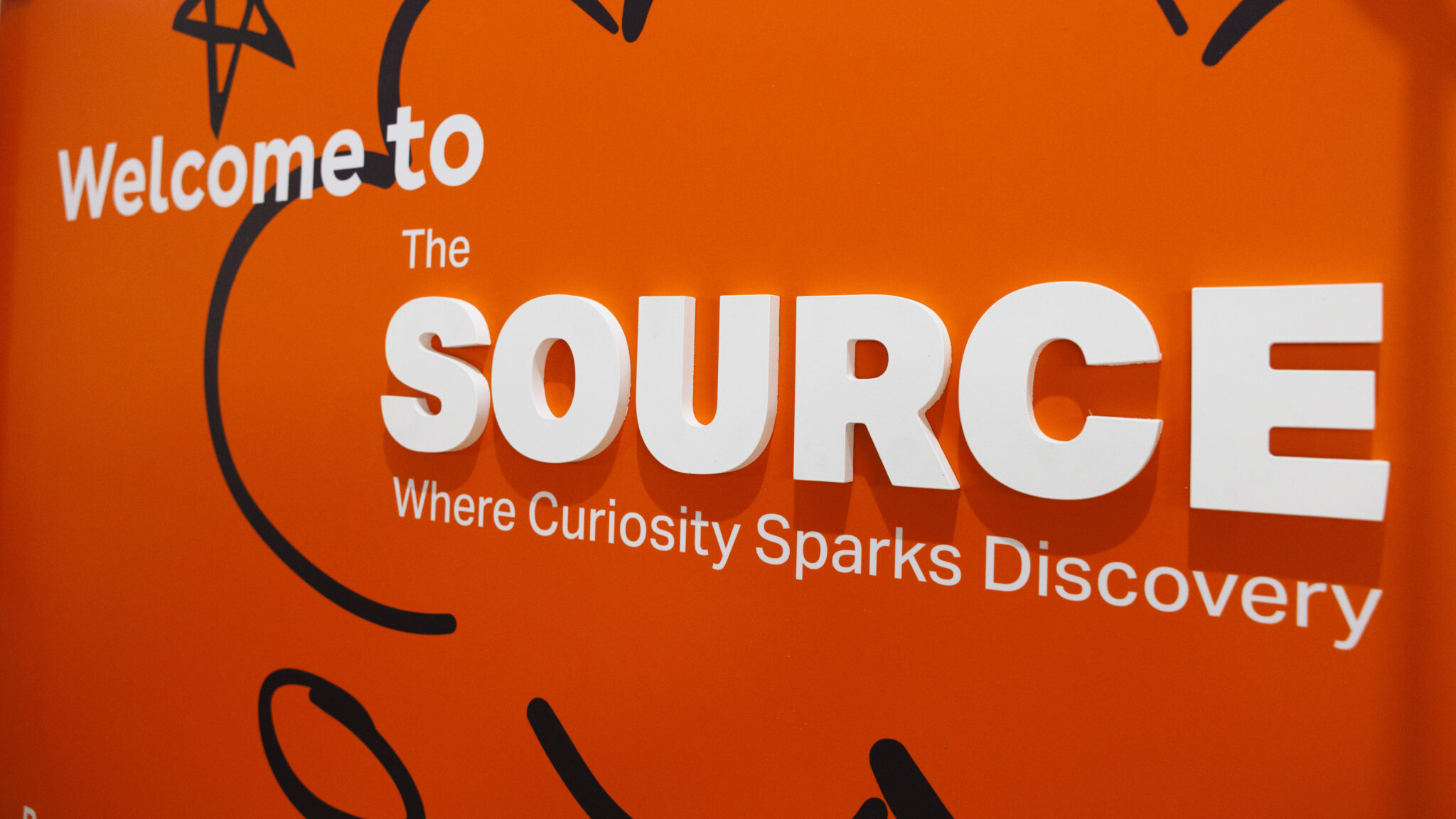
Washington/CMEDIA: The familiar wooden card catalog, at reportedly at the Library of Congress (LOC)’s The Source, is the first-of-its-kind experiential research gallery’s entry point into history in multiple formats such as text, image, sound and film leading into research.
From the moment the visitors enter the ground floor of the Jefferson Building where The Source is located, they can ask questions, and explore history through a blend of nostalgia and modern technology.
By combining curated, age-appropriate materials with intuitive digital tools, The Source centres on three core ideas — engaging with primary sources, building research skills and sparking creativity — allowing visitors to explore and interpret content in ways that make research approachable and fun, says Shari Werb, lead curator of The Source and director of the Library’s Center for Learning, Literacy and Engagement.
“We wanted to design a space that resonated with kids, so we invited them into the design process,” Werb said. “This space provides young researchers with an opportunity to follow their curiosity as they discover the primary sources at the Library.”
Aligning with the Library’s broader mission, children and teens ages 8 to 15 are invited to analyze materials, ask questions and draw their own conclusions.
As the largest library in the world, overseeing more than 184 million items — from manuscripts and photographs to books, maps, recorded sound and film — the Library has long preserved history in its original, unadulterated form.
Developed as part of the Library’s long-term Visitor Experience Master Plan, with bipartisan support from Congress, The Source translates that mission into an experience tailored for young people where they can access engaging and relevant collections representing a sustained investment in expanding public access.

A visitor checks out flip books in the welcome room (above) of The Source on opening day. In the image zone (below), young researchers can explore 150 photographs, maps, posters and more. Photo: Shawn Miller.

It also marks a shift in how research is introduced. For many young people, research can feel abstract and daunting, confined to textbooks or search engines. In the gallery, it becomes a tangible game changer: A newspaper can be scrolled on a replica microfilm reader, a photograph can be examined up close, and a single question can lead to discoveries across multiple formats.
The new learning space, by design, is self-directed and driven by curiosity, encouraging visitors to take on the role of investigators.
With 30 overhead graphics reproduced from collections and 10 pull-out drawers, the welcome room sets the tone and features items such as “Take Me Out to the Ballgame,” Spider-Man comics and historic newspaper front pages announcing the moon landing, the March on Washington and the sinking of the Titanic, among others.
The drawers, when pulled out, trigger related sounds and animations.
Supporting what educators call “reading to learn” rather than “learning to read,” the gallery at its core is aimed at kids who already have foundational literacy skills and are ready to deepen their understanding of the world.
Offer meaningful entry points to the Library’s holdings, digital tools reinforce hands-on learning, allowing visitors to zoom in on details, and follow prompts and develop their own interpretations.
Tips on navigating collections of Life-sized video displays of seven librarians add a human element, as they share insights about their.

In the sound zone (above), Dianne Choie of the Library’s Informal Learning Office leads a school program about using sound recordings for research. In the film zone (below), visitors can screen 59 historical film clips on a replica projector. Photo: Shawn Miller.
Helping to demystify the research process, these tools make it feel personal and achievable, rather than an overwhelming sensory and informational overload.
Across four zones, visitors encounter the breadth of the collections.
In the text zone, 40 manuscripts and 10 newspaper front pages document historic moments — from the signing of the Declaration of Independence to the end of World War II — with replica microfilm readers that show how researchers explored such topics in the past.
Visitors in the image zone, can examine more than 150 photographs, portraits, stereographs, maps and posters as they search for clues and context. In the sound zone, drawers containing 50 recordings — from early broadcasts to oral histories, accounts from veterans and songs — can be played on a replica phonograph, giving voice to pivotal moments. The film zone containing 59 samples of newsreels, documentaries and early clips flicker to life on a replica projector, showing how stories have been captured and shared across generations.
Featuring more than 200 curated objects threaded throughout, visitors are encouraged to build their own interpretations.
Among the most distinctive features are research boxes — 12 completed so far — covering topics such as the Ghost Army of World War II, the evolution of basketball and research by former National Ambassador for Young People’s Literature Meg Medina into 1970s New York.
These boxes facilitate visitors to follow a researcher’s journey and reach their own understanding.
Caleb Sinnwell, who joined the youth advisory group at age 14, worked on a research box about the Ghost Army, a U.S. military unit known for its use of myriad visual and audio deception tactics.
“I pushed for including a film clip that sparked my interest in the Ghost Army, which showed the unconventional methods they used to deceive Nazi forces,” Sinnwell said. “Seeing and hearing a giant speaker blasting out fake battle sounds or watching a soldier pick up and move an inflatable tank is shocking. I felt it would draw kids into the exhibit to learn more.”

Monica Valentine of the Informal Learning Office acquaints visitors with The Source at its grand opening. Photo: Shawn Miller
Sinnwell, now a rising sophomore at Northwest Iowa Community College in Sheldon, Iowa, believes the gallery’s youth-centric approach will resonate with visitors.
“I never knew how much I loved history until I started studying and researching it using primary and secondary sources. I hope young people realize how fun and amazing researching history can be,” he added.
Extending beyond the gallery’s walls through ‘The Source Creative Research Journal’, the educational experience of a 48-page companion journal designed as a continuation of the visit and available for purchase in the gift shop.
Together, the 4,000-square-foot gallery, the journal and The Source website create a continuous experience from curiosity to exploration to creation.
Including open-captioned videos, large-print guides and sensory kits with noise-canceling headphones and fidgets, The Source was designed with accessibility in mind.
To facilitate the visit, staff wearing Source-themed T-shirts are available.
Operating Tuesday through Saturday, the gallery can accommodate up to 188 visitors at a time with expectation to welcome about 150,000 people annually, from families to school groups.
Over five years, that could mean more than 1 million young visitors engaging with primary sources — many for the first time.
The Source encourages the next generation of thinkers, creators and informed citizens — at a time when information saturates the web and social media — to examine evidence and consider context to better understand an increasingly complex world
Offering a glimpse into the past by magical card catalog drawers, the lesson is not just what to find but how to keep looking.
“We want kids to leave here feeling equipped — able to seek out reliable sources and think critically about what they encounter,” Werb said. “Information is everywhere, but meaning still needs a place. At The Source, young people move beyond answers to explore ideas, ask new questions and make discoveries of their own. In a world of instant information, this is where curiosity deepens.”
This blog was originally posted by Maria Peña, a public affairs specialist in the Office of Communications, where she helps promote the Library of Congress’ collections, programs and services.