
Vancouver/CMEDIA: Two newly identified minerals—one from a deep Earth diamond—offer rare insights into the planet’s interior and honour UBC researchers and their legacies.
Dr. Lee Groat, professor in the department of earth, ocean and atmospheric sciences (EOAS), and alumna Mary Macquistan found raudseppite in barium-rich rocks in the Yukon by accident when examining samples under a microscope. They named the new mineral after late colleague Dr. Mati Raudsepp, who ran the Electron Microbeam lab. “He was quite a character—we all have Mati stories,” said Dr. Groat, who also has a mineral, groatite, named after him.
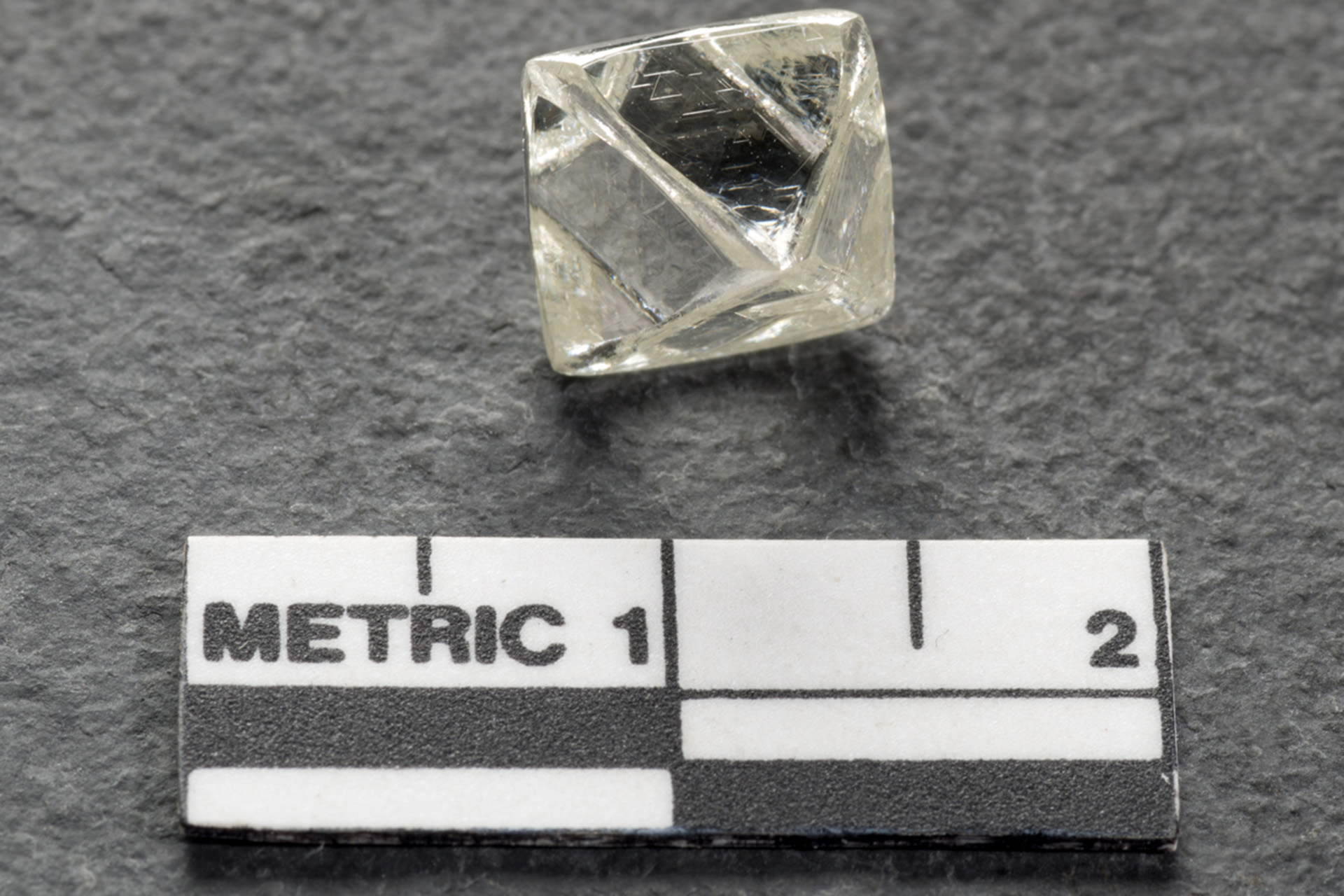
Kopylovite was discovered locked inside a ‘deep diamond’ formed about 150 kilometres beneath the Earth’s surface by alumnus Dr. Nester Korolev. He named the mineral after his former supervisor and EOAS professor, Dr. Maya Kopylova, and her father, Gerzen Kopylov. “I wanted it to be a family mineral,” said Dr. Kopylova. “My father was a role model for me—a physicist and poet who opposed the totalitarian regime of the Soviet Union.”
A rare find
About 100 minerals are discovered annually, with only 6,200 in existence, and modern minerals are often smaller than a grain of dust. Scientists have to show a unique chemistry and atomic structure to confirm and name a new mineral. Less than three per cent are named after women.
Clues from the Earth
The minerals trapped inside kopylovite provide rare insights into the makeup of the Earth’s interior: rich in potassium and titanium, its presence suggests that the area where it formed contained very little water, said Dr. Kopylova. “If more water and a compound called alumina had been present, these elements would likely have been incorporated into mica, a much more common mineral.”
This research was funded in part by a Natural Sciences and Engineering Research Council of Canada Discovery Grant.