
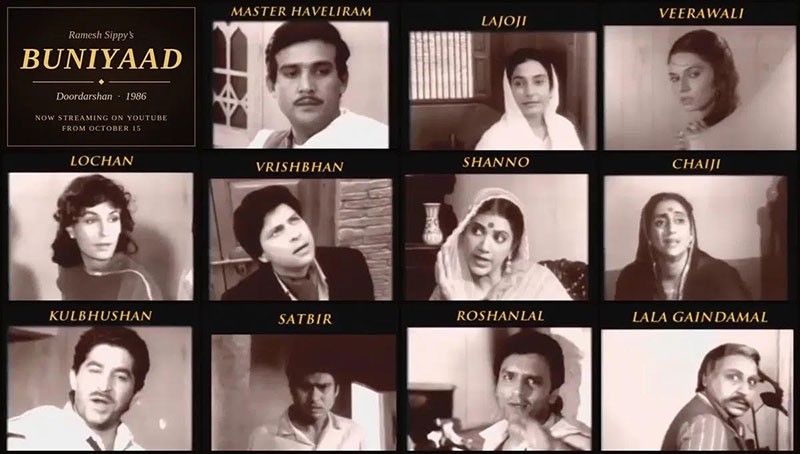
IBNS-CMEDIA: Ramesh Sippy’s Buniyaad, Doordarshan’s landmark Partition saga, streams on YouTube starting October 15. Kiran Joneja says it is for Gen Z. For the rest of us, it is a homecoming, says Sujoy Dhar.
Some television you watch. Some you inhabit. For a generation of Indians, Buniyaad was the second kind.
When it first aired on Doordarshan in 1986, there was no scrolling, no second screen and no “watch later.” There was one set in the house, one channel worth fighting over, and a family arranged around it.
Our parents watched, and so did our grandparents. The Partition they had lived through, or fled, or buried in silence, had suddenly found a voice in the living room. Three generations sat on the same sofa and, for once, talked about it.
When the screen was black and white
It was also a different kind of screen. Colour television had arrived by then, but most of us still watched on black-and-white sets, and nobody thought of it as a lack. The grey, flickering glow suited the story. Lahore, the lost haveli and the long trains felt like memory itself.
And it was an emotional business. You planned your evening around the episode. Dinner was early, homework was done, and the neighbours’ children squeezed in on the floor. Then, halfway through a scene that had the whole room holding its breath, the power would go.
 Photos: Screen-grab/YouTube
The screen would shrink to a dot and die. The groan that went up in that room was a small heartbreak, shared by every family in the lane. You waited, you hoped, you cursed the electricity board, and you begged for the lights to return before the scene ended.
Compare that with today: reels, shorts and streaming—a bombardment that asks nothing of us and gives little back. Appointment viewing taught us patience, and made the story matter more because we had to wait for it.
 Photos: Screen-grab/YouTube
A Lahore that existed only in memory
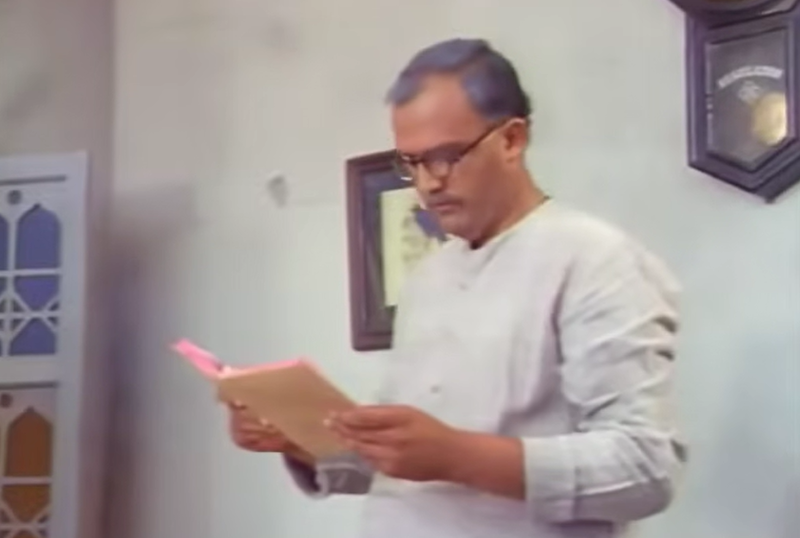
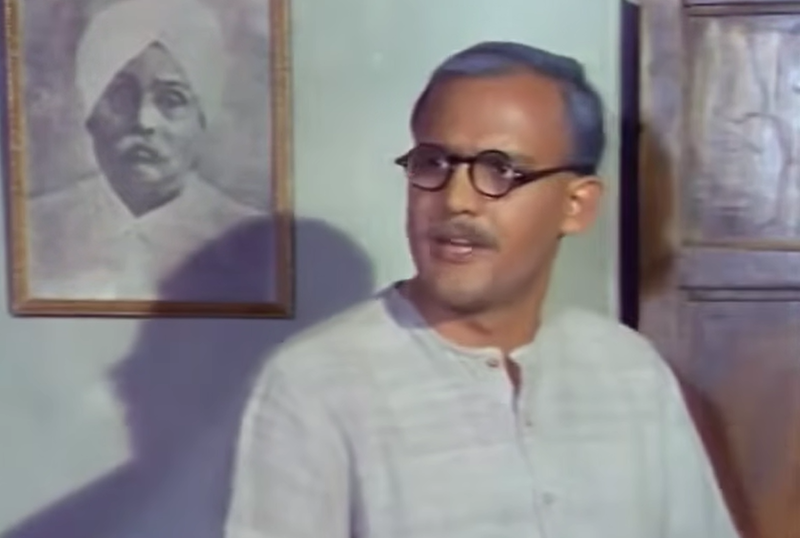
Manohar Shyam Joshi’s story began with Master Haveliram, a principled schoolteacher in Lahore, and his wife Lajwanti, whom the whole of India came to call Lajoji. It did not shout history at us. It showed us a home, a household, a way of life, and then it showed us that home coming apart.
That was the serial’s quiet genius. Partition here was not a date in a textbook or a line drawn by a distant commission. It was a family losing its address, its neighbours and its sense of who it was. The rebuilding that followed, in a new city with borrowed furniture and old grief, made up the real drama.
The faces we never forgot
Few serials have been so well cast. Alok Nath gave Haveliram a dignity that stayed with viewers long after the credits. Anita Kanwar’s Lajoji became a national aunt. Kiran Joneja’s Veerawali, sharp, spirited and unforgettable, was a character you argued about at dinner.
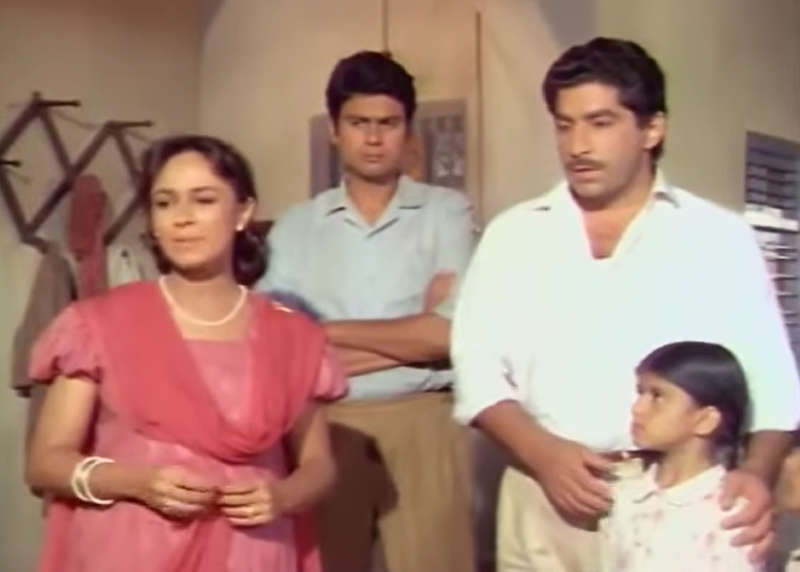
At the centre of Buniyaad were Lajoji and Haveliram, a couple whose lives and love became inseparable from our own memories of the show.
Theirs was not a love story built on grand declarations, but on a lifetime of togetherness, sacrifice, quiet understanding and the kind of companionship that only grows deeper with time.
Through the upheaval of Partition, the loss of their home, the scattering of their family and the struggle to rebuild life from nothing, they held on to each other and to the values that gave their family its foundation.
 Photos: Screen-grab/YouTube
Lajoji’s quiet strength and Haveliram’s dignity made them feel less like characters on a screen and more like people we had known all our lives. We worried for them, felt their pain, celebrated their small joys and watched them grow older with a lump in our throats.
What made their story extraordinary was how ordinary it felt: two people growing old together, carrying memories of a lost world, finding reasons to go on because they still had each other.
Not every love story in Buniyaad was allowed a happy ending. Veerawali (Joneja), Haveliram’s sister, gave her heart to Vrishbhan (Vijayendra Ghatge), a man from Delhi who had come to Lahore on business with her father.
The relationship left her with a son, Satbir, born outside marriage in an age that had no room for such a child. Haveliram and Lajoji took the boy in as their own, a quiet act of grace in a serial full of loss. Vrishbhan went on to a married life elsewhere, with a son of his own.
Veerawali’s own story turned inward, and she resurfaced years later at an ashram in Uttarkashi as Pragyavati.
A remarkable ensemble supported the Partition story: Kanwaljit Singh, Soni Razdan, Dilip Tahil, Vijayendra Ghatge, Mazhar Khan and many more. Each character was etched with a patience that today’s fast-cut television rarely affords.
There was joy in it, and weddings, and small domestic victories. There was also love, and love lost, and the particular sorrow of people who cannot go back. We cried at the same scenes our grandparents did, perhaps for different reasons.
Now, to a new screen
This week, the serial comes full circle. Buniyaad streams on YouTube from October 15, forty years after its television debut. Kiran Joneja, who is married to Ramesh Sippy, announced the move on social media.
“We are bringing Buniyaad on our YouTube channel in its original form so that Gen Z can understand Partition and the particular time period,” she said. She will also share behind-the-scenes anecdotes before every episode.
 Joneja announces Buniyaad’s return on YouTube. Photo: Instagram Screenshot
That promise matters. The serial arrives in its original form, not recut or modernised. And the anecdotes will give viewers something a streaming algorithm cannot: the voice of someone who was there.
Why it matters now
Partition survivors are fewer with each passing year, and first-hand memory is fading. A generation raised on reels may find Buniyaad’s pace unhurried. That is exactly the point.
The questions Buniyaad asks have not aged: what a home means, what a border does to the people living near it, and what is passed down when a family loses everything.
For those of us who grew up with it, tomorrow is a chance to sit down again with Haveliram and Lajoji, this time with no power cut to fear. For those who never saw it, it is an introduction to a story that explains more about the subcontinent than most textbooks can.
Some things are worth watching twice, and this one is worth watching across forty years.
(Additional reporting by Souvik Ghosh)