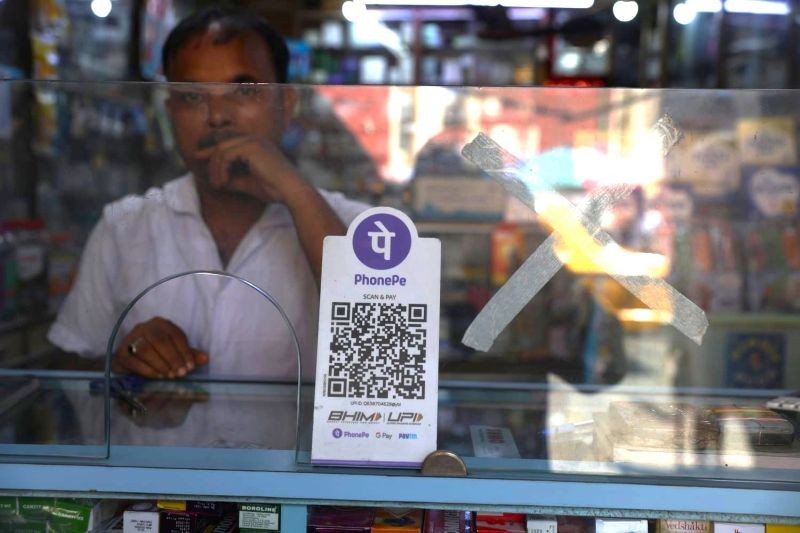
New Delhi/IBNS-CMEDIA: The Centre’s decision to impose a charge on certain UPI transactions above Rs. 2,000 has created confusion among traders, with some reportedly considering a return to cash payments to avoid the additional cost.
According to media reports, traders and shopkeepers across Delhi and elsewhere are expressing disappointment over the new rule, which will come into effect on October 15, 2026.
Some traders have questioned why they should bear an additional cost after paying Goods and Services Tax (GST) and other business expenses.
Traders raise concerns over additional cost
“We were already paying transaction charges and 18% GST. Now if govt charges us on UPI MDR, then we will promote cash. When govt came with the UPI payment method, we supported it. We are already grappling with issues like freezing of bank accounts and the imposition of restrictions due to complaints regarding cyber fraud.
“In such a climate, any additional increase in the cost of accepting digital payments is a cause for concern for small and medium-sized traders,” Nitin Gupta, president of the Kamla Nagar Market Association, told The Times of India.
Gupta also said traders may find it difficult to return to cash payments after becoming accustomed to digital transactions.
Brijesh Goel, chairperson of the Chamber of Trade and Industry, echoed the concern, saying the new system could affect the adoption of digital payments among small traders.
“In the past six years, we have with great difficulty brought even the smallest of shopkeepers and street vendors onto UPI.
“Today, 90% of payments in Sadar Bazar, Chandni Chowk, Lajpat Nagar, Chawri Bazar, Kamla Nagar, Karol Bagh and Gandhi Nagar are through UPI. If MDR is imposed, it will be a setback to the Digital India mission,” Goel told The Times of India.
Opposition demands withdrawal
The government’s move has also triggered strong reactions from the Opposition, with Lok Sabha Leader of Opposition and Congress MP Rahul Gandhi urging the Centre to withdraw the decision.
Gandhi has accused the Modi government of enabling Merchant Discount Rate (MDR) fees on UPI merchant transactions above Rs. 2,000, arguing that the cost could ultimately be reflected in consumer prices despite official assurances that customers will not be directly charged.
“The government says no fees will be charged to customers. But where will the fees imposed on shopkeepers ultimately come from? Added to prices, straight out of the customer’s pocket,” Gandhi said.
Gandhi has also alleged that the move was influenced by US concerns over UPI and competition with American payment networks.
“American payment companies have long opposed India’s zero-MDR policy. Now, the Modi government has opened the path to changing the policy in exactly that direction. Just like with the US Trade Deal, Compromised PM Modi is once again surrendering to American pressure,” he said.
Centre says decision will not be rolled back
The Centre, however, has clarified that the decision will not be rolled back, maintaining that consumers themselves will not pay the MDR.
The Finance Ministry has said MDR is neither a tax nor a charge collected by the government or the National Payments Corporation of India (NPCI). Instead, it is distributed among banks, payment service providers and other participants in the UPI ecosystem.
Why the new UPI rule has caused confusion
The controversy has partly stemmed from the distinction between a UPI charge on consumers and MDR applicable to certain merchant transactions.
Under the new framework, a 0.4% MDR will apply to specified person-to-merchant (P2M) transactions above Rs. 2,000 from October 15. Person-to-person (P2P) transfers will remain free, while the MDR cannot be directly passed on to customers.
However, traders are concerned that the additional cost could put pressure on their margins and make cash payments more attractive for higher-value transactions.
Why the Rs. 2,000 threshold matters
The new rule applies to eligible merchant payments above Rs. 2,000, marking a significant change after years of zero-MDR UPI transactions.
Traders are particularly concerned about the cumulative impact of the charge on higher-value transactions, including during the upcoming festive season.
96% of transactions to remain unaffected
The Finance Ministry has said approximately 96% of merchant transactions will remain unaffected, as payments up to Rs. 2,000 and qualifying small-merchant transactions will continue under the zero-MDR framework.
However, the figure refers to the proportion of transactions and should not be interpreted as meaning that 96% of merchants or 96% of the total value of UPI merchant payments will be unaffected.
Small merchants retain exemption
The new framework also provides protection for certain small merchants. Merchants receiving up to Rs. 1 lakh per month through UPI QR codes under the P2PM category will continue to receive zero-MDR treatment.
Larger merchants and specified transactions will come under the new framework, leaving businesses to determine whether their transactions and monthly receipts qualify for the exemption.
The distinction between consumer payments, merchant transactions, MDR, exemptions and the entities that ultimately receive the fee has therefore become a key source of confusion surrounding the Centre’s new UPI framework.