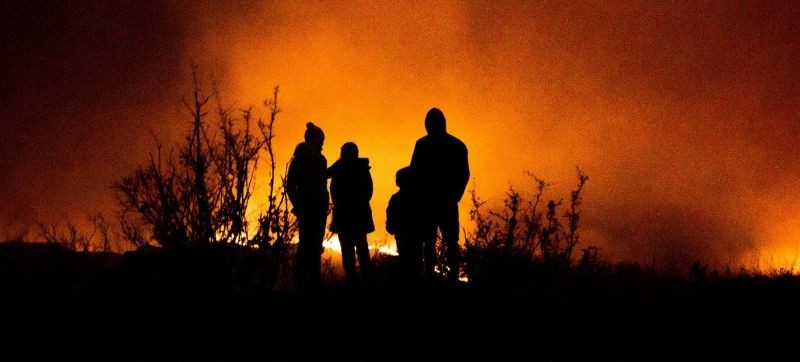
IBNS-CMEDIA: French authorities have ordered the evacuation of nearly 60,000 people near Bordeaux, taking the total number of people displaced by wildfires in France and Spain to around 220,000, according to media reports.
Around 200,000 people have been evacuated from the Gironde and Landes regions in southwestern France, the BBC reported.
French President Emmanuel Macron has mobilised the military to assist evacuation and firefighting operations as multiple blazes continue to spread across the region.
In Spain, authorities warned that a massive wildfire near Madrid is now “beyond the capacity” of firefighters to contain after three separate fires west of the capital merged into a single blaze, the BBC reported.
Spanish authorities have declared a national emergency, ordering around 25,000 people to evacuate while advising nearly 40,000 others to remain indoors due to the advancing flames and hazardous smoke.
“The wildfire is at its peak and is currently beyond the capacity of firefighters to contain,” Carlos Novillo, head of emergency management for the Madrid regional government, told reporters, according to the BBC.
“It is not possible to attack the fire in that area, so defensive measures are being taken,” he added.
Wildfires worsening across Europe
The area of land destroyed by wildfires across Europe has increased by 57 percent over the past four years, according to new data released by the World Health Organization (WHO) Europe.
Wildfires burned 2.2 million hectares across the WHO European Region in 2025, compared with 1.4 million hectares in 2022.
In Spain and neighbouring Portugal, the number of wildfires has more than doubled compared with last year.
On Friday, Madrid declared a national emergency as the fires near the capital forced thousands of residents to flee. Regional officials described the blazes as the worst the area has ever experienced.
In southern France, about 63,000 people have been evacuated following multiple wildfires that have already destroyed around 80 homes, according to French authorities.
“Wildfires destroy homes and livelihoods, force evacuations, and place enormous pressure on emergency services and health systems. Tragically, they also claim lives,” the WHO said in a press release.
Climate change driving more intense fires
The WHO warned that climate change is making wildfires more frequent and more destructive by creating hotter, drier conditions and extending the wildfire season. Rapid urbanisation is also increasing the risk of devastating fires reaching populated areas.
UN urges faster clean energy transition
Simon Stiell, Executive Secretary of the UN Framework Convention on Climate Change (UNFCCC), said on Friday that accelerating the transition to renewable energy is essential to protecting communities from worsening climate-related disasters, including wildfires.
“Action now is the basis of long-term peace and security around the world,” Stiell said.
Health risks extend beyond the flames
The WHO warned that wildfire smoke poses serious health risks, particularly for older adults, children, pregnant women, and people with pre-existing heart or respiratory conditions.
Fine particulate matter released by wildfire smoke has been linked to respiratory and cardiovascular diseases, liver disorders, eye infections, as well as cognitive impairment and memory loss.
Wildfires can also disrupt healthcare services, damage essential infrastructure, and have lasting effects on mental health, the agency added.
WHO safety advice
The WHO urged people living in or travelling through wildfire-affected areas to follow official instructions, evacuate when advised, avoid unnecessary travel, and wear a well-fitting protective mask if they must go outdoors.
The agency also called on governments to issue timely weather and health alerts, ensure access to emergency and primary healthcare, and provide additional support to vulnerable populations.
“We’re working with countries to assess risks, prepare for emergencies, develop guidance to protect people from wildfire smoke and extreme heat, and strengthen the resilience of health services and facilities,” WHO Europe said.