Washington/CMEDIA: Calgary-born astronaut Jenni Gibbons is reportedly set to participate in NASA’s Artemis II mission, which will send humans to the moon for the first time in more than 50 years.
“So much of our life is enabled by space,” Gibbons was reported to say.
Being a backup for Canadian astronaut Jeremy Hansen, Gibbons won’t be on the rocket but will still perform a critical role in its launch and voyage through space.
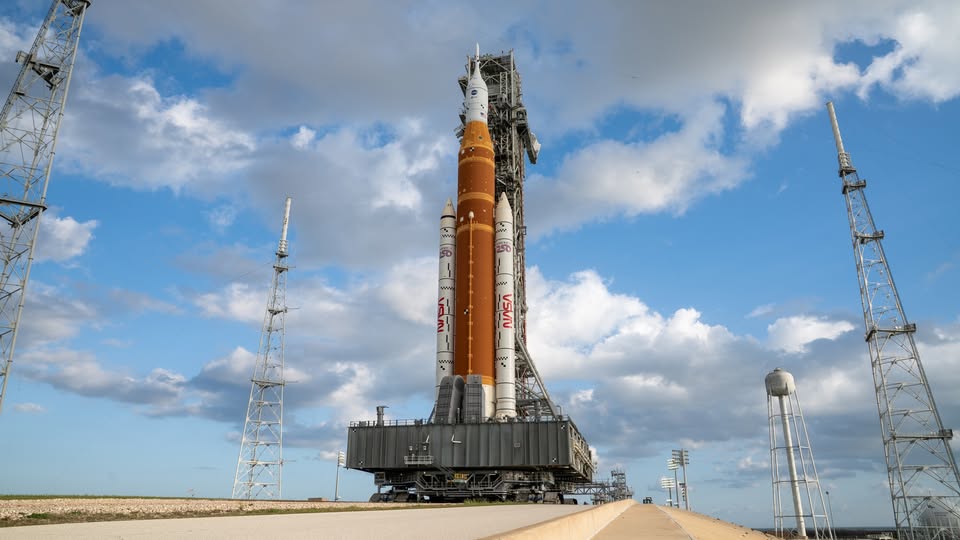
NASA’s launch for Artemis II has been targeted for April 1, with a six-day launch window running through April 6.
NASA’S attempt to send the four astronauts from Florida’s Kennedy Space Center on a 10-day lunar fly-around in February was delayed by hydrogen fuel leaks and helium flow problems.
Provided all goes well next week, Hansen, 50, of London, Ont., serving as the mission specialist during Artemis II will become the first non-American to travel beyond low Earth orbit.
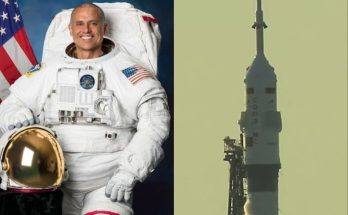
Hansen will be joined by veteran NASA astronauts Reid Wiseman, Victor Glover and Christina Koch.
In the unlikely event that Hansen cannot fly, Gibbons, the backup astronaut, is assigned to ensure that Canada keeps its seat on the mission, the Canadian Space Agency has said.
Having always dreamt, since childhood of travelling to space Gibbons said she’s close with Hansen and his family and is honoured to play a supporting role in the mission.
“I just want more than anything to see his dream actualized and see him fly in space on a successful mission,” she said.
Gibbons has gone through years of the same training as those on the rocket. Ahead of next week’s launch, she must stay prepared and go into quarantine with the other astronauts.
In the days and hours before takeoff, Gibbons will also enter the capsule to ensure it’s ready to take the astronauts up.
While the rocket circles the moon, Gibbons will serve as a voice link from Earth to space coaching Hansen and the other astronauts on key mission objectives.
Keenly anticipating takeoff, the team focuses on executing the plan they’ve been working on for years, she said.
“The crew is ready. I’m really proud of the way that they’ve matured and prepared for this mission and the team is ready to support them too,” she said.
It will noy only be a monumental moment for Gibbons, she said she had great role models and mentors growing up — people who showed her that nothing, not even outer space, was beyond her reach.
“I just knew that it was a possibility,” Gibbons said and added that her mom helped plant the seed by taking her to see legendary Canadian astronaut Roberta Bondar speak.
Always being drawn to creative problem-solving and science which led her to engineering, she got a mechanical engineering degree from McGill before completing a PhD at Jesus College in Cambridge.
“When Canada announced they were recruiting astronauts, I just thought back to all of that curiosity and all of that exposure early on,” Gibbons said.
After being selected by the Canadian Space Agency in 2017 at the age of 28, she soon relocated to Houston for training and was just the third woman to join the ranks of Canadian astronaut recruits.
Canada has many experts in tech fields that support space exploration, such as robotics pushes Canada’s space expertise forward but also has an economic impact by creating jobs and inspiring innovation, Gibbons said.
Space missions also help Canadians understand their own vast landscape better.
“Space exploration is fundamental and important for the whole world, but especially for Canada because we are such a huge nation, where so many of our natural resources and really the heartbeat of our landscape can only be viewed and taken from outer space,” she said. “So investing in space assets is particularly important for us.”
Given the grim state of global geopolitics, Gibbons said that Artemis II “is one shining example of what you can achieve when you collaborate and co-operate and have a shared mission.”
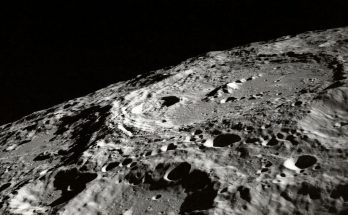
Gibbons added this mission will take humans farther from Earth than anyone has ever gone, and allow the astronauts to see parts of the moon never before seen up close by human eyes.
Having worked with geologists who want the astronauts’ own descriptions of the colours and textures of the moon’s far side, the team “is also really interested in the way that those features make us feel as humans and our reaction to them,” she said.