
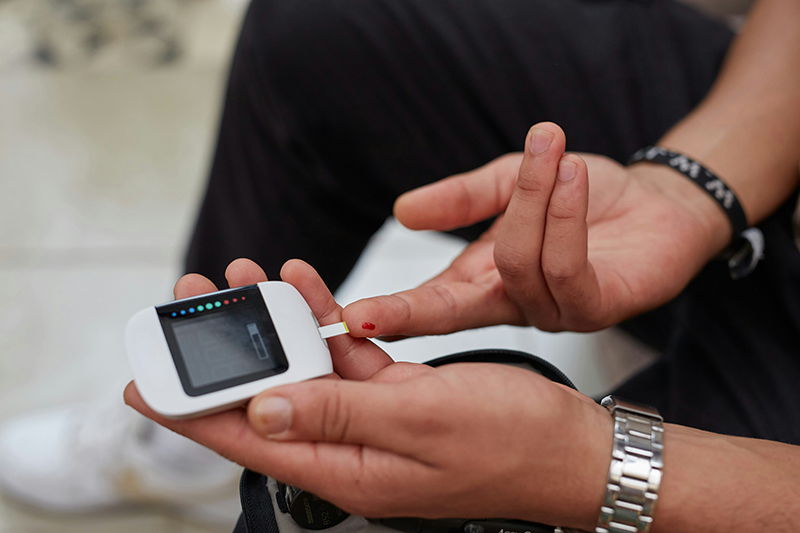
Having Type 1 Diabetes may be linked to a significantly higher risk of developing Dementia, according to a study published on March 18, 2026, in Neurology.
While Type 2 Diabetes has long been associated with an elevated dementia risk, the new findings suggest that the link could be even stronger for people with Type 1 diabetes. However, researchers caution that the study establishes an association, not causation.
“Advances in medical care have extended the lives of people with Type 1 diabetes, making it increasingly important to understand its relationship with dementia risk,” said study author Jennifer Weuve, MPH, ScD, of Boston University. “We have known about the connection with Type 2 diabetes, but this research indicates the association may be even stronger for Type 1.”
The study analysed data from 283,772 individuals with an average age of 64. Among them, 5,442 had Type 1 diabetes and 51,511 had Type 2 diabetes. Participants were followed for an average of 2.4 years.
During this period, 2,348 people developed dementia:
144 individuals with Type 1 diabetes (2.6%)
942 individuals with Type 2 diabetes (1.8%)
1,262 individuals without diabetes (0.6%)
After adjusting for variables such as age and education, researchers found that people with Type 1 diabetes were nearly three times more likely to develop dementia compared to those without diabetes. Those with Type 2 diabetes were about twice as likely.
Researchers further estimated that around 65% of dementia cases among people with Type 1 diabetes could be attributed to the condition.
Although Type 1 diabetes accounts for only about 5% of all diabetes cases, the findings carry growing significance as more individuals with the condition live beyond 65 years of age.
“This condition contributes to a relatively small share of overall dementia cases,” Weuve noted. “But for the increasing number of older adults with Type 1 diabetes, these findings highlight the urgent need to better understand the mechanisms involved and explore ways to prevent or delay dementia.”
The study does have limitations. Both diabetes and dementia diagnoses were identified through electronic health records and survey data, which may not capture all cases.
The research was supported by the National Institutes of Health.