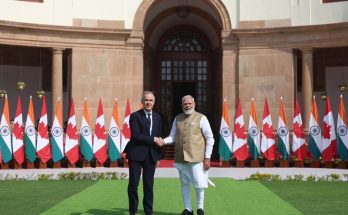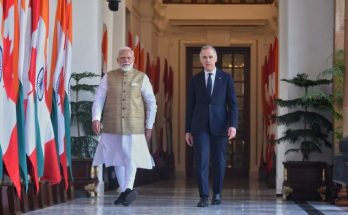
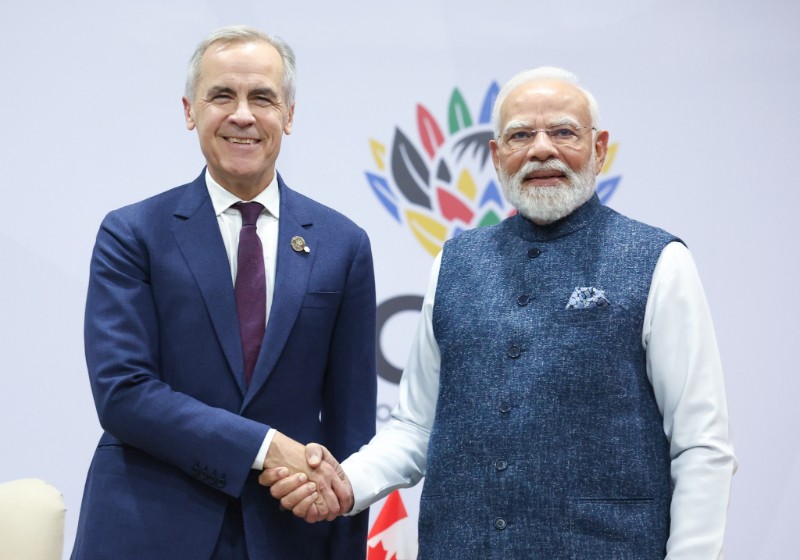
IBNS-CMEDIA: India and Canada are poised to reset strained bilateral ties with a landmark 10-year uranium supply agreement, expected to be the centrepiece of Canadian Prime Minister Mark Carney’s proposed visit to India in the first week of March.
The long-term uranium contract, estimated to be worth about 2.8 billion Canadian dollars, is being seen as the most significant outcome of the visit, which is also likely to cover wider energy cooperation, including crude oil, liquefied petroleum gas and liquefied natural gas, as well as collaboration on critical minerals.
Uranium deal to anchor reset in ties
Officials familiar with the discussions say the uranium agreement could serve as a strategic anchor for rebuilding trust after India–Canada relations hit a low point during former prime minister Justin Trudeau’s tenure.
Canada, the world’s second-largest uranium producer, accounts for nearly 13–15 percent of global output, exporting the bulk of its production to nuclear reactors across the United States, Europe and Asia.
For India, a stable and long-term uranium supply from Canada would strengthen fuel security for its expanding nuclear energy programme, at a time when New Delhi is seeking to diversify sources and scale up clean energy generation.
Broader energy cooperation on the table
Beyond nuclear fuel, Carney’s visit is expected to explore long-term cooperation in hydrocarbons and minerals.
Canada holds some of the world’s largest proven oil reserves, primarily in Alberta’s oil sands, estimated at around 163–170 billion barrels.
It also ranks among the top countries globally in natural gas reserves, with estimates exceeding 1,000 trillion cubic feet.
Canadian Energy Minister Tim Hodgson, currently in India, has indicated that talks will focus on deepening energy and mining ties under the existing Canada–India nuclear cooperation framework.
He has said discussions may include crude oil and LNG transactions, alongside collaboration in critical minerals.
High-level groundwork ahead of March visit
In the run-up to Carney’s proposed trip, National Security Adviser Ajit Doval and senior Indian ministers are expected to travel to Ottawa to finalise the visit agenda and iron out key agreements.
These preparatory engagements are aimed at ensuring deliverables that go beyond symbolism and translate into long-term economic and strategic gains for both sides.
Trade talks set to resume
The visit is also likely to coincide with the revival of formal negotiations for a Comprehensive Economic Partnership Agreement between India and Canada.
India’s High Commissioner to Canada, Dinesh Patnaik, recently said talks are expected to begin in March and could be concluded within a year.
Negotiations had been stalled for nearly two years before both countries agreed to resume discussions in November.
A successful CEPA would significantly expand bilateral trade and investment flows, complementing the proposed energy and uranium agreements.
Nijjar case and diplomatic context
On the sensitive issue of the killing of Khalistani separatist Hardeep Singh Nijjar, Patnaik has said a court case is underway in Canada against four accused individuals.
He added that India would act if credible evidence emerges linking any Indian national to the case, signalling New Delhi’s intent to address concerns through legal channels.
Canada’s shifting global calculus
Carney’s outreach to India comes at a time when Canada’s relations with the United States are under strain.
The Canadian leader has been vocal in criticising recent US actions, arguing that they have reshaped global trade dynamics.
Against this backdrop, Ottawa is seeking to expand engagement with major economies such as India and China to boost exports, attract investment and support domestic economic growth.
According to experts, if finalised, the uranium deal would not only mark a major commercial win for New Delhi but also signal a pragmatic recalibration of India–Canada relations, with energy security and economic cooperation at its core.