
#CIA#CIA spy mission India # Nanda Devi nuclear device # Cold War espionage Himalayas # CIA China surveillance # plutonium generator India # Himalayan nuclear secret
IBNS-CMEDIA: At the height of the Cold War in 1965, China’s first atomic test sent alarm bells ringing in Washington.
Keen to monitor Chinese missile activity deep inside Tibet, the CIA devised an audacious plan: plant a nuclear-powered surveillance antenna atop one of India’s tallest Himalayan peaks, with a clear line of sight into Chinese territory.
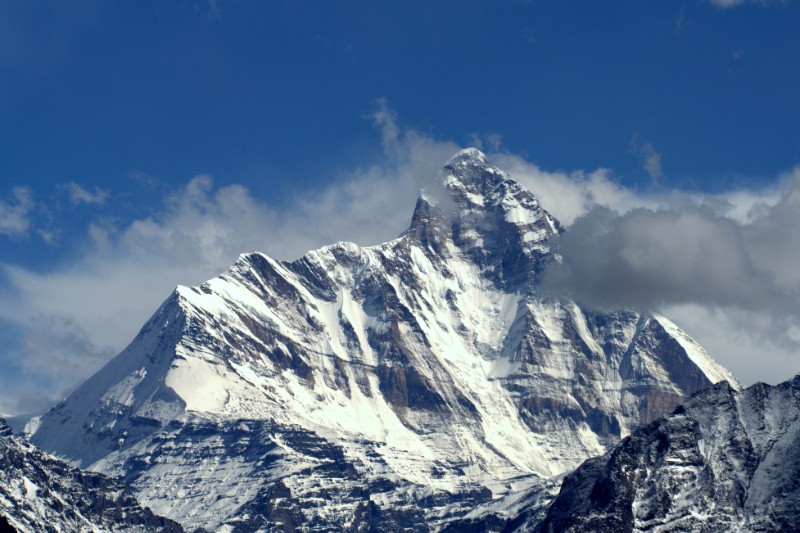
The chosen mountain was Nanda Devi, towering above the Indo-Tibetan frontier.
What followed was a covert operation that combined espionage, high-altitude mountaineering and nuclear risk—ending with a plutonium device disappearing into the ice, never to be recovered, according to a recent report by the New York Times.
A spy mission disguised as science
The idea reportedly took shape at a cocktail party, where US Air Force chief General Curtis LeMay spoke with Barry Bishop, a National Geographic photographer and veteran Everest climber.
Bishop described how Himalayan summits offered unparalleled views into Tibet and western China.
The CIA soon approached him to organise a clandestine expedition, masked as a scientific survey.
Thus was born the so-called “Sikkim Scientific Expedition,” a cover story designed to hide the mission’s true purpose.
Bishop recruited American and Indian climbers, including Jim McCarthy, a young lawyer and mountaineer paid by the CIA for what it termed a matter of national security.
India, still reeling from its 1962 defeat against China, quietly cooperated.
Yet Captain M.S. Kohli, the Indian Army officer leading the expedition, remained sceptical from the start.
Plutonium on the mountain
The cargo was extraordinary. Along with antennas and cables, the team carried a 13-kilogram nuclear-powered generator known as the SNAP-19C.
Inside were plutonium capsules—nearly a third of the material used in the Nagasaki atomic bomb.
The climb began in September 1965. Climbers were airlifted to extreme altitudes with minimal acclimatisation, leaving many ill and exhausted.
Ironically, the radioactive generator emitted heat, providing warmth in the freezing conditions.
Sherpas even competed for the chance to carry it, unaware of its long-term dangers.
“At the time, we had no idea how dangerous it was,” Kohli later admitted.
The blizzard that changed everything
Near the summit in mid-October, disaster struck. A sudden blizzard engulfed Nanda Devi, trapping the team high on the mountain.
From advance base camp, Kohli issued a desperate radio command, urging the climbers to abandon their ascent and return immediately.
His order was stark: secure the equipment, but do not bring it down.
The team stashed the nuclear device and antenna on an icy ledge near Camp Four and fled downhill to survive.
In doing so, they left behind one of the most dangerous objects ever abandoned in the Himalayas.
A vanishing act under ice
The following year, a recovery mission returned to Nanda Devi. The device was gone.
An avalanche had torn away the ledge, along with ice, rock and all the equipment.
CIA officials reportedly panicked. Radiation detectors and infrared sensors were deployed, but the searches yielded nothing.
McCarthy later speculated that the generator’s heat may have caused it to melt through the ice, sinking deeper into the glacier feeding the Ganges river system.
Officially, the United States denied that anything had happened.
The secret comes out
The story remained buried until 1978, when journalist Howard Kohn exposed the operation in Outside magazine.
The revelations triggered outrage in India, with protesters warning that the CIA had contaminated Himalayan waters.
Behind the scenes, however, New Delhi and Washington moved swiftly to contain the fallout.
US President Jimmy Carter and Prime Minister Morarji Desai corresponded privately, referring to the episode as an “unfortunate matter.”
Publicly, both governments maintained silence.
Regret and a lasting shadow
Decades later, the men involved looked back with anger and remorse.
McCarthy, now in his 90s, has repeatedly condemned the decision to abandon plutonium near a glacier that feeds the Ganges, a lifeline to hundreds of millions.
Captain Kohli, before his death, called the operation a personal tragedy.
He criticised the CIA’s planning as reckless and admitted he would never repeat such a mission.
The nuclear device on Nanda Devi has never been found.
Buried somewhere beneath ice and rock, it remains one of the Cold War’s most chilling secrets—lost, unresolved and still haunting the Himalayas.