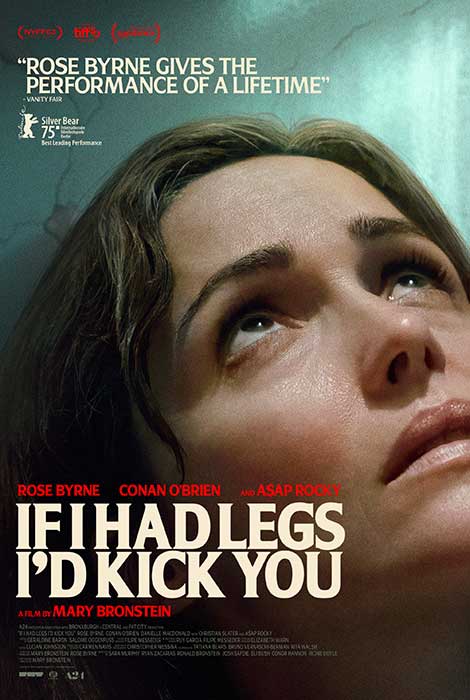
Toronto/CMEDIA: Written and directed by Mary Bronstein, performance of Rose Byrne (played by Linda) in TIFF 2025 film ‘If I Had Legs I’d Kick You’ with its intense focus on one character’s breakdown, is an anxiety-ridden portrayal of an overwhelmed mother.
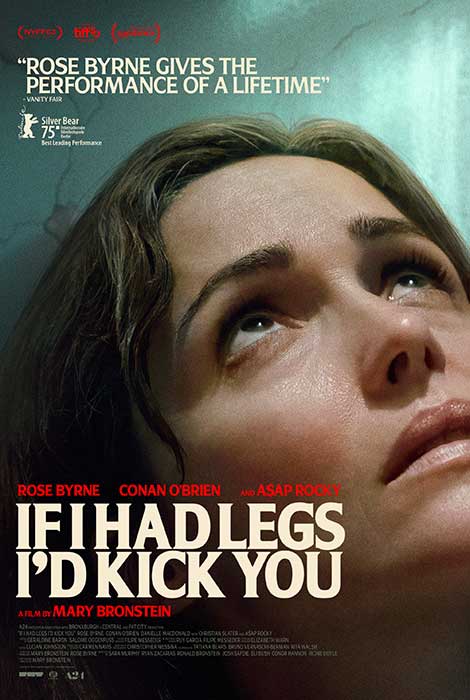
Being a working wife and mother in Montauk, Linda’s life is full of stress and anxiety with her daughter suffering from an unknown disease, and is hooked up to a constantly beeping medical device. Her husband. Christian Slater is away at sea working and unable to alleviate the crippling pressure weighing on her every minute while dealing with a home that’s literally caving in.
Asha Bajaj from Canadian-Media and Trans World Features on the sidelines of TIFF 2025 in conversation with Rose Byrne of the TIFF 2025 film ‘‘If I Had Legs I’d Kick You’’ following the film’s Canadian Premiere at the 50th Edition of the Toronto International Film Festival.
Here is the excerpt:
To Rose: You spoke in the intro about how although this is not explicitly autobiographical, it’s based on an experience that Mary went through herself. Can you elaborate on this?
The film is extremely near and dear to me, inspired by Mary Bronstein’s own journey in her life. I’m honored to be part of this project. I’d like to take a moment to thank Mary for allowing me to bring the character of Linda to life. Mary really lit the page on fire when she wrote this script and brought it to life in a way that was beyond my wildest dreams. Mary has been doing this really cool thing where she asks the audience to like take a breath and just for a minute think about the most traumatic event of your life. Everyone’s had one. Just remember that feeling and then take a moment and think about the most traumatic event that happened to you today. This story of Linda is a very specific thing she’s going through, but the feelings are universal. It’s really punk rock, and I really trust you guys with the experience you’re about to have.
Was there any pressure stepping into this role knowing that you’re kind of in the same space that she was and you’re interpreting it?
Subconsciously she was so protective of the performance, and protective of me when we were filming. The film was shot in approximately 26 days. There wasn’t a big budget. It was ambitious with its sequences and she was just my touchstone. We had a great rehearsal period of over a month just sitting at a table, her and I combing through the script and telling stories and asking questions. We did some research. We spoke to a lot of mothers who have children with special needs. But of course there is that subconscious pressure in the back of your head, but I was also just so nervous. Watching Linda go through what she’s going through is very stressful. and it’s understatement. She feels very alone and her therapist is short-tempered. Every time you take a call with your husband, he is very unhelpful.
How did you feel about putting yourself in that space constantly?
Honestly my adrenaline was so high doing the shoot. I was just operating at a thousand percent. Afterward I felt the crash and felt the sense of loss or grief in a way for the experience and for the gift of this character and working with Mary. But at the time my adrenaline was so high. I was just going so fast and there was so much to do every day. And such rich scenes. There’s a lot of comedy as well as humor in the movie. And of course some days were harder than others, but you know, I got to yell at Conan O’Brien a lot of days.
This film is very intimate with the camera right in Linda’s face and almost aligning with her completely. How was that experience to act with the camera that close and how did Mary explain that vision to you?
On the first day, the camera was on me in the first scene I shot, which is actually the first scene in the film where they’re talking to Dr. Spring in therapy and she’s having a disagreement about what they think should be the next steps. And the camera got closer and closer and I looked at Mary and I said, “Is it going to be this close all the time?” And she said, “Yeah.” And I said “Okay.” And then I never asked again. And I guess it’s that power of sort of disassociating and also being hyper aware of the technical aspect of your performance. But when I saw the film I really had the full realization of the beautiful experience of the cinematic language of what Mary was doing and the story she’s telling as this film is purely from Linda’s perspective. A lot of it you’re not sure if it’s real or not and what is actually happening and what’s not happening. I didn’t appreciate that fully until I saw it. Only then it makes it much more immersive because even the sound aspect of it you backstage was rattling everything and the flowers were shaking so you can’t ignore.
I’m curious if you actually had to eat the food at the beginning of the movie like the chocolate and the pizza and the cheese?
Yes, I did. The pizza was very complicated when we had to flip it over. There were a lot of strings. It was sewn into the box. The cheese had to detach and attach. So, all of those things are really practical. Mary didn’t use any special effects. But I had to eat a lot of pizza.
So, Mary’s not here to talk about it, but can you talk a little bit about what the impact was of not showing the child’s face the entire film?
When we started, Mary was very assertive and said “This is my concept. This is my idea.” And for me, she was always there. We auditioned a lot of actresses for the role of the daughter and Delaney Quinn, this wonderful actress, plays her. So, she was my scene partner for me, but obviously visually you don’t see her in the storytelling. And I think it’s because Linda doesn’t see her until the end. I think she can’t see her. It’s really sad. And then at the end, when you see her is a heartbreaking moment because she can finally look at and see that she’s just a little girl. So, for me, that’s how I interpret it. But I think for everybody it’s probably different.
What were your first thoughts when you first read the script and how did these evolve when you were shooting?
I thought it was like fire. The script just lit the page writing it. It’s just so radical and dangerous and funny and there was a beautiful symmetry to the script that remains in the film. I love the way it goes in and out of existential moments and it offers more questions than answers. I’ve done a lot of jobs where you were improvising and you were changing things up and this was not the case. We were very much sticking to every scene in the best possible way. Not that I didn’t want to change anything. So we had this wonderful rehearsal process which was such a gift. You don’t get that usually in TV and film, especially something independent like this. And I think without that I would have felt pretty untethered. So I felt I was very lucky. Apart from yelling at Conan O’Brien you also had a very good rapport with him and ASAP Rocky, not known for his film acting. But now I think this was ASAP Rocky’s first of two great performances.
Linda is having a really bad day. Was there a discussion at any point that there might be a happy portion?
The ending ends on a positive note. I think the final line is actually heartbreaking when she said she was going to remove the device to which she was hooked. She hasn’t said that throughout the whole film. She hasn’t even been able to see her daughter in front of her.
So for her being able to say that ends with hope. I would like to know how do you balance the the comedy with the very dramatic aspects?
Mary was so great because the film has this extraordinary tension that builds and builds and this claustrophobia. She knows just when to push it far enough and you can laugh whether it’s in the moments with in the scenes with the therapist or even on the phone with her husband or the hamster sequence which is so funny. These moments where you get to have a release and the audience hopefully stays with her. And that’s really a testament to Mary just tonally getting that really perfect because you have to stay on the journey, right? And, obviously through humor which is such a best tool to do that.
Were there any instances where you had to kind of redo a scene?
That’s a good question. No one’s asked that. You know, Mary just knew this movie so well. She had it in her head, this vision so specific. We definitely gave choices like different variations of scenes but she always knew when to pull back or more or try. The hamster sequence was pretty complicated. There is also the sequence where the hole in the roof becomes increasingly surreal.
I’m wondering about the last scene about the waves and when did you film that? Was it the beginning of the end or the end of the shoot? And how did that influence the way that you felt during that scene?
That was shot toward the end. And we had to shoot the whole film before the winter set because of that sequence and that was in Montauk. The waves had been very calm for the few weeks we’ve been shooting and then that night the sea became quite angry. I’m Australian so I have a lot of respect for the ocean. We learn to swim as soon as we’re born. And I simultaneously love the ocean and swim a lot, but I’m also very wary of it just having grown up on this island so far away on the coast. So I was looking forward to the sequence, but I knew it was going to depend so much on the waves that night. We nearly lost the cameraman. He nearly went down as he got caught up, and we weren’t that far out, but the tide was so strong. So, it’s a combination of me and a brilliant, brilliant stunt woman called DJ who was just extraordinary. But I did a lot of it. And honestly culturally I have a relationship with the ocean. Because of that I was already preparing for it in many ways. Subconsciously that sequence is really quite stunning and was definitely a huge set piece that we were all preparing for the whole anticipation for those nights was very present on the shoot.
What’s the symbolism of the hole getting bigger and bigger?
There are so many holes in the movie because there’s a hole in Linda’s daughter’s stomach. There’s a hole in the ceiling there, there’s that beautiful symmetry again within the story. And I think you feel like it’s the answer within you. Not to be so corny, but I do. I feel like it’s part of the questions, not the answers. And I feel like there’s something endless about that.