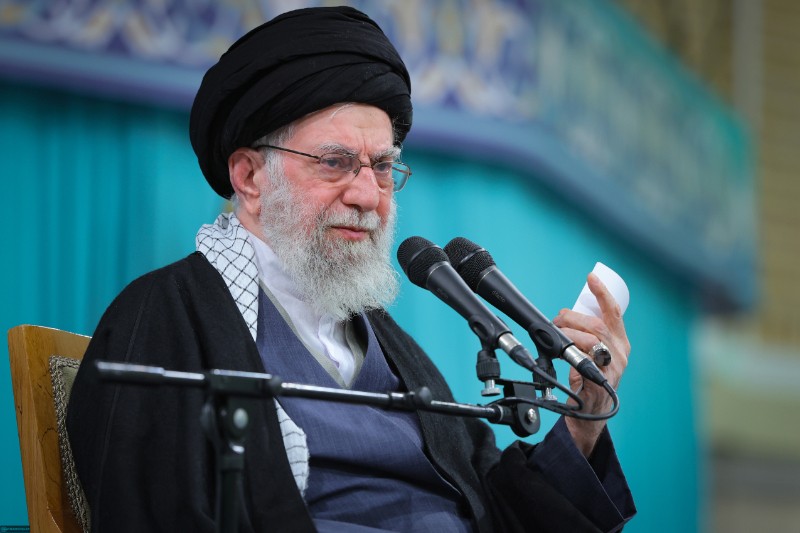
IBNS-CMEDIA: A sophisticated intelligence campaign involving hacked traffic cameras, mobile network disruption and human sources reportedly paved the way for the killing of Iran’s Supreme Leader, Ayatollah Ali Khamenei, in a US–Israeli air strike in Tehran.
According to a detailed report by the Financial Times, Israeli intelligence services had infiltrated nearly all traffic cameras in Tehran years before the strike.
When senior Iranian officials arrived at offices near Pasteur Street — the location where Khamenei was killed on Saturday — Israeli operatives were monitoring their movements in real time.
One particular camera angle reportedly provided an unusually clear view into part of the tightly guarded leadership compound.
Analysts used advanced algorithms to expand dossiers on security personnel, compiling data that included home addresses, duty hours, commuting routes and the senior officials they routinely protected.
Intelligence officers describe this process as building a “pattern of life”, allowing agencies to predict movements with precision.
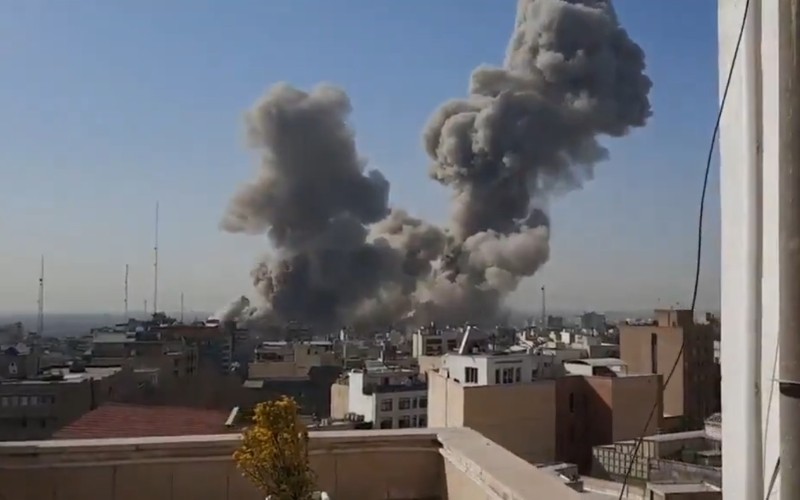 Israeli missiles hit a target in Tehran, Iran. Photo: X
Signals intelligence and human sources
The report states that this data-driven surveillance formed part of a years-long effort involving Israel’s foreign intelligence agency Mossad and its signals intelligence unit, Unit 8200.
Military intelligence teams reportedly processed vast quantities of intercepted information into daily operational briefings.
Israeli operatives also used social network analysis to examine billions of data points, mapping relationships and identifying key nodes within Iran’s political and security hierarchy.
Alongside signals intelligence, the operation reportedly relied on human intelligence.
While Israeli agencies tracked digital and communications data, US intelligence agencies are said to have obtained confirmation from a human source that Khamenei would attend a meeting at his compound on Saturday morning.
This confirmation created what officials described as a narrow operational window.
Intelligence assessments suggested that once open hostilities formally escalated, Iran’s leadership would likely move underground to hardened bunkers, making future targeting significantly more difficult.
Disrupting communications before strike
The report also claims that Israeli intelligence disrupted components of several mobile phone towers near Pasteur Street shortly before the attack.
This interference allegedly caused phones in the area to appear busy, limiting the ability of Khamenei’s protection detail to receive warnings.
Israeli intelligence reportedly detected preparations for a high-level leadership meeting on Saturday morning and moved the strike timetable forward.
Earlier reporting by Reuters had indicated that Israeli officials identified unusual activity at the Tehran compound in the hours leading up to the attack.
The United States played a parallel role.
According to General Dan Caine, chairman of the US Joint Chiefs of Staff, American forces launched cyber operations designed to “disrupt, degrade and blind” Iran’s capacity to detect and respond to the incoming assault.
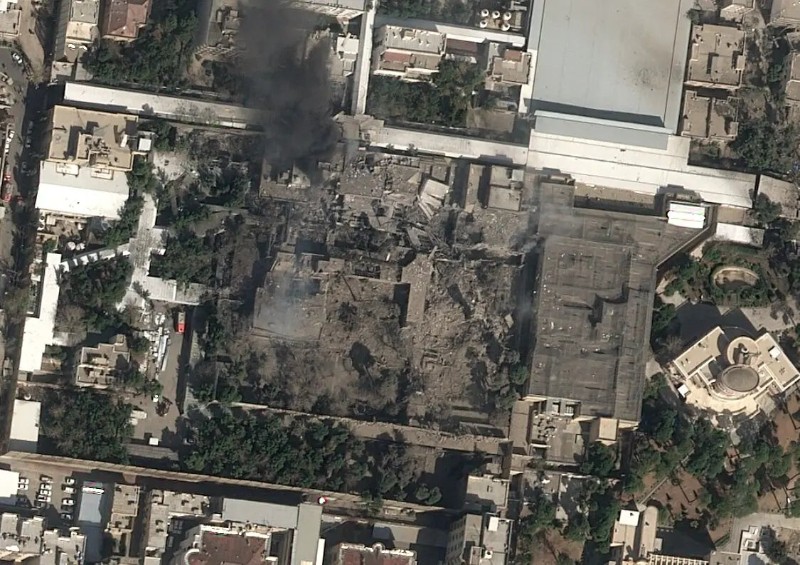 Satellite image of Ayatollah Ali Khamenei’s compound in Tehran, Iran, following US-Israeli strikes. Photo: X/@trbrtc/@Airbus
Precision weapons and air superiority
The air operation itself displayed overwhelming force.
The Israel Defence Forces (IDF) stated that approximately 200 fighter jets conducted what it described as the largest military flyover in the history of the Israeli Air Force, striking around 500 targets.
Israeli pilots reportedly deployed variants of the Sparrow missile system, weapons capable of striking targets as small as a dining table from distances exceeding 1,000 kilometres.
Officials cited in the report said the strategy during earlier hostilities had focused on neutralising Iran’s surveillance and detection capabilities before executing targeted strikes.
The killing of Khamenei marked a dramatic escalation.
He was only the second Supreme Leader of the Islamic Republic, succeeding Ruhollah Khomeini.
Unlike Hassan Nasrallah, who spent years in underground bunkers before being killed in Beirut in 2024, Khamenei did not live in prolonged concealment.
He continued to operate from visible leadership compounds in Tehran and had publicly downplayed the personal significance of his own survival.
Political decision amid diplomatic tension
The report emphasises that eliminating Khamenei was not merely a technological feat but a political decision.
It cites interviews with current and former Israeli intelligence officials who described the strike as months in preparation.
The timing coincided with fragile diplomatic efforts.
Negotiations between Washington and Tehran over Iran’s nuclear programme had been scheduled to continue, with mediation by Oman.
Omani officials described recent talks as constructive, suggesting that Tehran had shown willingness to make limited concessions.
However, US President Donald Trump had repeatedly warned of military action in the region.
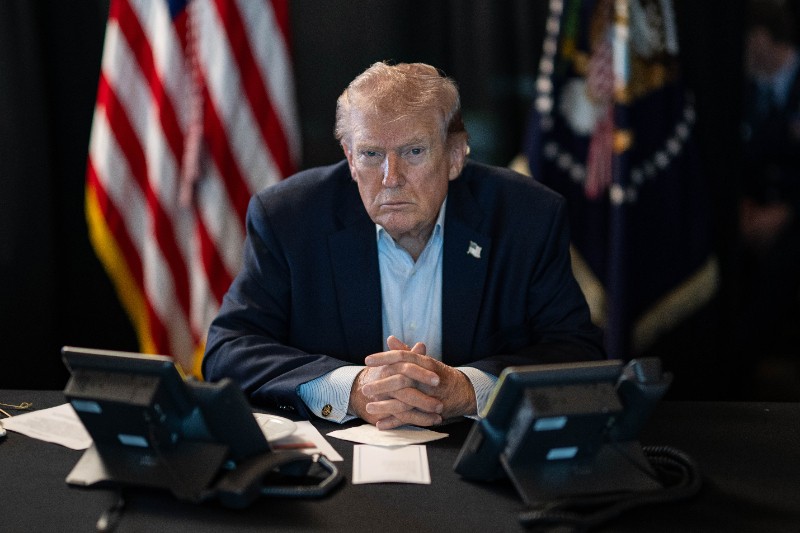 US President Donald Trump. Photo: Wikimedia Commons/The White House
Two days after inconclusive negotiations in Geneva, the strike was launched shortly after midnight in Washington, corresponding to daytime in Iran.
Trump later stated that the Supreme Leader had been unable to evade advanced intelligence tracking systems coordinated between the United States and Israel.
Iranian state television confirmed Khamenei’s death early on Sunday, broadcasting archival footage under a black banner.
Intelligence superiority on display
The operation echoed tactics reportedly used during a previous 12-day conflict, in which multiple Iranian nuclear scientists and senior military officials were assassinated in coordinated strikes.
Officials cited in the report described those earlier actions as demonstrating Israel’s ability to neutralise adversaries’ surveillance networks before executing precision attacks.
Despite extensive reporting, some operational details remain undisclosed.
Intelligence agencies typically withhold sensitive information to protect sources and methods, particularly in cases involving human assets and long-term cyber infiltration.
What has emerged, however, is a portrait of modern intelligence warfare shaped by digital surveillance, cyber disruption, algorithmic analysis and traditional espionage.
As further details continue to surface, the episode marks one of the most consequential intelligence-led military operations in the region’s recent history.