
#Mark Carney# EV Production# US# Canada# US Market# China
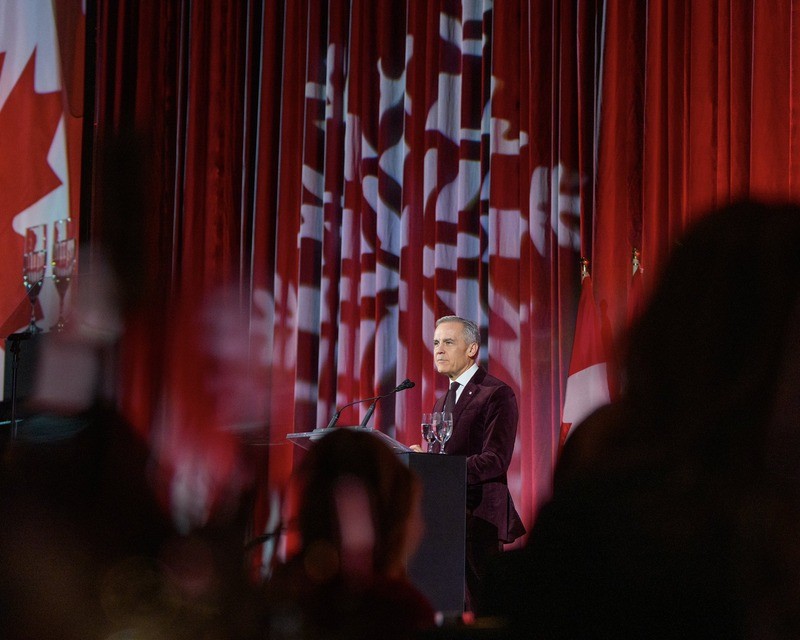
Ottawa/IBNS-CMEDIA: Prime Minister Mark Carney on Thursday announced a sweeping new automotive strategy aimed at reducing Canada’s dependence on the US, accelerating electric vehicle production, and protecting auto workers amid shifting global trade dynamics.
More than 90% of Canadian-made vehicles and about 60% of auto parts are currently exported to the US, leaving the sector exposed to trade shocks, the government said in a statement.
Under the new strategy, Ottawa will invest $3 billion from the Strategic Response Fund and up to $100 million through the Regional Tariff Response Initiative to support auto manufacturers as they diversify markets and modernise production.
Additional incentives include the use of productivity-based tax deductions and reduced corporate tax rates for zero-emission technology manufacturers.
The government also announced stricter greenhouse gas emission standards, setting targets of 75% electric vehicle sales by 2035 and 90% by 2040.
These standards will allow Ottawa to repeal the Electric Vehicle Availability Standard, giving manufacturers flexibility to meet emissions goals using a range of technologies.
To stimulate domestic demand, the government will launch a five-year EV Affordability Program worth $2.3 billion. The program will offer purchase or lease incentives of up to $5,000 for battery electric and fuel cell vehicles, and up to $2,500 for plug-in hybrids.
A $50,000 price cap will apply to vehicles made in countries with free trade agreements, but not to Canadian-made EVs.
Ottawa will also invest $1.5 billion to expand Canada’s EV charging and hydrogen refuelling infrastructure through the Canada Infrastructure Bank.
On trade, the government said it will maintain counter-tariffs on US auto imports and strengthen its automotive remission framework to favour companies producing in Canada.
It also pointed to new strategic partnerships with South Korea and China to diversify supply chains and attract investment, including joint ventures in EV manufacturing.
To support workers, the plan includes a new work-sharing grant, a national workforce alliance involving industry and labour, and $570 million for reskilling and employment assistance for up to 66,000 workers.
“Canada’s new government is fundamentally transforming our economy,” Carney said, adding the measures are designed to build “a strong Canadian auto sector.”
(Reporting by Suman Das)