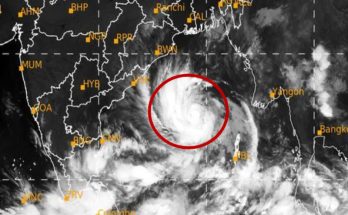
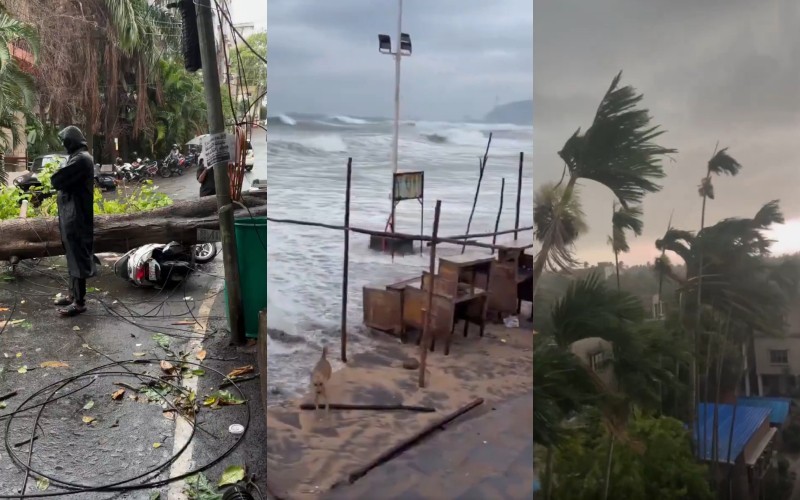
IBNS-CMEDIA: The India Meteorological Department (IMD) on Wednesday, October 28, said that very severe cyclonic storm Arnab was lying over the west-central Bay of Bengal, off the Andhra Pradesh coast, and had remained stationary for the previous three hours.
The storm was bringing heavy rainfall to several parts of Andhra Pradesh and Odisha, with adverse weather conditions expected across other states.
In a post on X, the IMD said the storm was centred at 5.30 am IST at latitude 16.4°N and longitude 82.0°E, approximately 30 km east of Narsapur, 45 km south-southwest of Yanam, 70 km south-southwest of Kakinada, 90 km east-northeast of Machilipatnam and 170 km east-northeast of Bapatla.
The weather agency said the cyclone was very likely to move northwestwards and cross the Andhra Pradesh and Yanam coasts between Bapatla and Visakhapatnam, close to south of Yanam, as a very severe cyclonic storm. The system was expected to make landfall with maximum sustained wind speeds of 115–125 kmph, gusting to 140 kmph, within the following two hours.
The IMD subsequently reported that the storm’s centre was very close to the coastline and that the landfall process was likely to continue for the next two hours.
Andhra Pradesh Steps Up Emergency Preparedness
Ahead of the expected landfall, Andhra Pradesh and Odisha had stepped up precautionary measures, preparing thousands of cyclone shelters, evacuating residents from vulnerable areas and placing disaster response teams on standby.
Andhra Pradesh Chief Minister N Chandrababu Naidu said the state government was closely monitoring evacuation operations and ensuring that emergency personnel, equipment and essential supplies reached vulnerable areas without delay.
In an earlier post on X, Naidu said the state had identified 2,199 cyclone shelters and prepared evacuation plans prioritising elderly people, children, persons with disabilities and pregnant women. He added that 2,360 pregnant women had already been shifted to medical facilities.
Protecting every life is our foremost priority as Andhra Pradesh prepares to face #CycloneArnab. I have reviewed the situation four times since this morning and remain in constant contact with District Collectors and senior officials. Through continuous reviews, I am monitoring evacuations and ensuring that personnel, equipment and essential supplies reach vulnerable areas promptly. We have identified 2,199 cyclone shelters and prepared evacuation plans, prioritising the elderly, children, persons with disabilities and pregnant women. Already, 2,360 pregnant women have been shifted to medical facilities. Twelve NDRF and ten SDRF teams have been assigned to the districts, with deployment underway. Police, Fire Services and medical teams are mobilised, while the Navy and Coast Guard are ready to assist. Food, drinking water, medicines and generators are being arranged, and over 8,400 power restoration personnel have been mobilised. Control rooms are functioning round the clock. I appeal to everyone to remain calm, stay alert and cooperate with the authorities. Move immediately to designated shelters when advised. Fishermen must not venture into the sea until official clearance is given. Keep essential supplies and charged phones ready. Avoid unnecessary travel, beaches, riverbanks, floodwaters and fallen power lines. Remain in safe shelter until authorities confirm that the danger has passed. Follow official updates and government precautions. Do not circulate rumours. Please check on vulnerable neighbours and inform local officials of anyone needing assistance. The government machinery is working continuously for your safety. Your timely cooperation will help us protect lives. Together, we will face this challenge.
— N Chandrababu Naidu (@ncbn) October 27, 2026
Twelve National Disaster Response Force (NDRF) teams and ten State Disaster Response Force (SDRF) teams had been assigned to various districts, with deployment underway.
“Police, Fire Services and medical teams are mobilised, while the Navy and Coast Guard are ready to assist,” Naidu said.
He added that arrangements were being made for food, drinking water, medicines and generators. More than 8,400 personnel responsible for power restoration had also been mobilised, while control rooms were operating round the clock.
Odisha Prepares to Evacuate Nearly 48,000 People
Odisha was preparing to evacuate approximately 48,000 people from low-lying and landslide-prone areas, according to the state’s Special Relief Commissioner, Rajesh Prabhakar Patil. As of Tuesday, evacuation operations had not yet begun.
The proposed evacuation plan included approximately 11,000 people each from Gajapati and Nabarangpur districts.
The state government announced the closure of schools and colleges in five districts on Tuesday and Wednesday, while schools in eight districts were also scheduled to remain closed.
Odisha had identified 135 permanent cyclone shelters and around 1,600 temporary shelters to accommodate people evacuated from vulnerable locations.
Authorities had mobilised 294 rescue teams, comprising nine NDRF teams, 60 SDRF teams and 225 Fire Services teams. Ganjam district received the largest deployment, with two NDRF teams and nine SDRF teams.
The state had earmarked ₹19 crore for relief and preparedness measures, with authorities setting a target of zero casualties.
Ports at Paradip, Dhamra and Gopalpur were placed on alert, and fishermen were advised not to venture into the sea.
Orange Alert Issued for Heavy Rainfall
An orange alert warned of rainfall ranging from 12 cm to 20 cm in Puri, Gajapati, Ganjam, Rayagada, Koraput and Malkangiri districts of Odisha.
The IMD also forecast heavy to extremely heavy rainfall across several states, including West Bengal, Jharkhand, Chhattisgarh and Uttar Pradesh, as the cyclonic system moved inland.
Officials were additionally monitoring the risk of flash floods resulting from rainfall in the upper catchment areas of rivers in Chhattisgarh and Jharkhand.
Authorities across the affected states remained on alert, with evacuation arrangements, emergency response teams and essential supplies being mobilised to minimise casualties and damage.