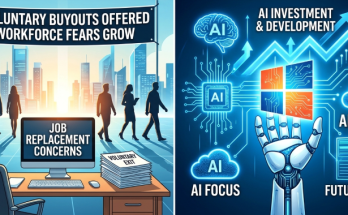
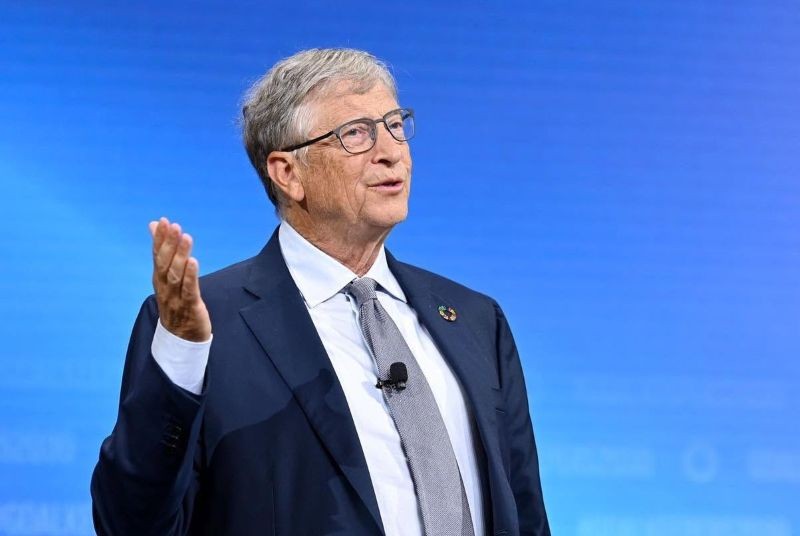
Washington DC/IBNS-CMEDIA: Microsoft co-founder Bill Gates has warned that business incentives to replace human workers with artificial intelligence (AI) could lead to widespread job losses, raising concerns about the future of employment in an increasingly automated world.
In an interview with Observer, Gates described the AI era as an “evolutionary event” but cautioned that its implications could be far-reaching.
He argued that machine intelligence would eventually surpass human cognitive abilities, prompting companies to increasingly prioritise automation over human labour.
‘Hire the robot, fire the human’
Gates criticised the business incentives driving AI adoption, describing the approach as “hire the robot, fire the human and don’t look back”.
He warned that AI could eventually take over a wide range of jobs, including tasks involving invention and white-collar professions.
The development of humanoid robots could further extend automation into physical labour.
AI could challenge government finances
Gates also highlighted the financial challenges governments could face as AI-driven prosperity grows alongside unemployment and rising retraining costs.
He cautioned that declining employment could reduce tax revenues even as governments face greater pressure to support displaced workers.
To address the challenge, Gates suggested taxing AI use, potentially through a tax on AI tokens, to help finance social safety nets and retraining programmes for people whose jobs are affected by automation.
Bioterrorism and cyberattacks among major concerns
Beyond employment, Gates identified bioterrorism and cyberattacks as significant near-term risks associated with increasingly powerful AI systems.
He warned that malicious actors could exploit advanced AI tools to cause widespread harm.
Gates also called for urgent work on AI “alignment control” — ensuring that increasingly capable systems remain aligned with human interests. He said serious efforts in this area would be necessary over the next three to four years.
Gates highlights AI’s potential benefits
Despite his concerns, Gates acknowledged AI’s potential to deliver significant benefits, particularly in healthcare and public services.
He pointed to the technology’s ability to accelerate drug discovery, improve healthcare delivery and make public services more efficient.
Gates also stressed the importance of cooperation between the United States and China in addressing certain AI-related risks, arguing that these challenges should be treated as threats to humanity rather than merely as a geopolitical contest.