
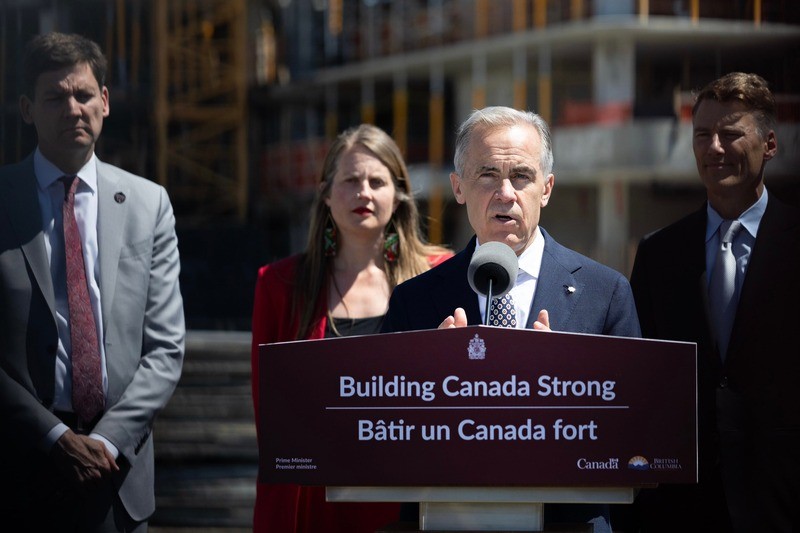
Canada’s Prime Minister Mark Carney and British Columbia Premier David Eby announced the 10-year agreement in Vancouver in a statement, describing it as part of broader efforts to address housing affordability and infrastructure pressures amid population growth.
Under the plan, Ottawa will provide nearly C$1.6 billion over a decade through its Build Communities Strong Fund, with the province matching the investment, creating a pool of up to C$3.2 billion to reduce development charges for multi-unit housing projects and expand housing-related infrastructure such as water, wastewater and road systems.
The federal government said the measure could lower development charges by up to 50% in priority communities, reducing costs by as much as C$40,000 per housing unit.
The two governments also launched a partnership between Build Canada Homes and BC Housing to convert more than 2,200 vacant condominium units in high-growth areas into affordable housing through innovative financing arrangements.
The agreement includes more than C$600 million in federal funding over three years, matched by British Columbia, to upgrade hospitals, emergency departments and urgent care facilities.
Ottawa will also invest C$2.5 billion over 10 years through the Canada Public Transit Fund to support new transit projects and service expansions, including work linked to the Surrey-Langley SkyTrain extension. The funding comes in addition to C$852 million previously committed to TransLink and BC Transit.
Separately, the federal government said it had introduced legislation to provide British Columbia with a one-time transfer of C$284 million aimed at removing barriers to new housing construction.
The province and federal government also agreed to jointly fund infrastructure projects in the northeastern community of Tumbler Ridge, including a new secondary school and renovations to a local health centre. Each government will contribute C$100 million toward the project.
The announcement forms part of the federal government’s Build Communities Strong Fund, a C$51 billion national infrastructure program launched earlier this year to support housing, transportation, health care, education and climate-resilience projects.