
IBNS-CMEDIA: Kani Kusruti speaks about portraying a rape survivor and fight for justice in Anubhav Sinha’s Assi, revealing how she approaches emotionally demanding roles, adapts to different directorial styles, and consciously detaches from her characters once the camera stops rolling. IBNS correspondent Souvik Ghosh brings excerpts of his conversation with the actor who plays a pivotal role – a school teacher who becomes the victim of a brutal abduction and gang rape inside a moving car — anchoring the film’s emotional and moral core.
Q. In Assi, you play a woman navigating the aftermath of sexual violence — not only as an individual tragedy but as a reflection of systemic failures. What prompted you to choose this film — the role of a survivor, Anubhav Sinha, or both?
A. For me, it’s never just the role or the director — the story is the driving force. The most important thing is what the story is trying to convey. That said, I haven’t always been fortunate enough to choose films purely on the basis of story. There have been occasions when I chose a project because the role was interesting or because of the director, even if the story didn’t resonate deeply with me. But ideally, it is always the story that guides my decision.
I watched Anubhav Sinha’s Article 15 and Thappad. While I may have had a slightly different opinion about certain aspects of Article 15, I appreciated how he attempts to present important subjects within a commercial format. That made me curious about what he had in store for me.
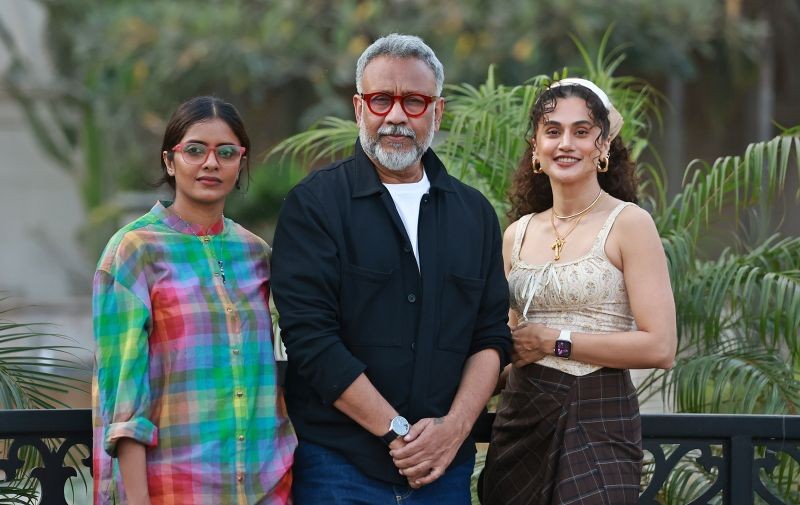 (L-R) Kani Kusruti, Anubhav Sinha and Taapsee Pannu. Photo: Avishek Mitra/IBNS
Q. How did you approach getting into the headspace of your character? Did you immerse yourself in the entire storyline first, or focus primarily on the character?
A. I usually begin by understanding the character directly, but to grasp the pulse of the story, I also like to explore the associated aspects. As an actor, I am always curious to understand what is happening in the larger narrative.
My approach evolves depending on the director. Not every director’s style coincides with mine. I consider myself more of a director’s actor — I try to perform the part the way the director envisions it, rather than imposing my own interpretation. Of course, there are moments of negotiation, but largely I align myself with the director’s vision.
Q. How does your performance style change with different directors and filmmaking techniques?
A. A well-written script does a lot of the work for an actor — it makes the process smoother. But every director has an individual style. Richie Mehta’s approach is different from Payal Kapadia’s or Anubhav sir’s.
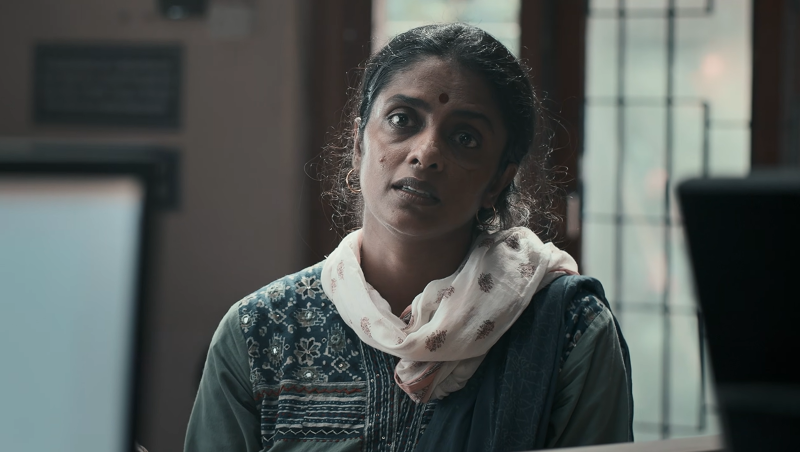 Kani Kusruti in Assi. Photo: Screen-grab/YouTube
For instance, Anubhav sir prefers taking just one shot, without a second opportunity. Poacher involved single takes, so the relationship between the DoP and the actor becomes very different, especially with a single handheld camera that doesn’t capture every angle. So naturally, my performance style changes depending on the story, the genre, and the director’s technique.
Q. How emotionally taxing was it to play a survivor, and how difficult was it to detach from the character?
A. I don’t function in a way where I remain soaked in a character. Once we pack up, I disconnect — I take a shower and go to sleep. I simply look forward to the next day. Thankfully, I have the ability to detach immediately when needed.
I come from theatre, where we often perform the same play multiple times over years — sometimes even playing two characters within one production. You learn to disconnect while still being fully present in performance. That training has helped me immensely.
Q. In an earlier interview, you described yourself as not a talented actor but a hardworking one. What did you mean by that?
A. I believe talent is something one is born with — it’s the natural range an individual possesses. Hard work, on the other hand, helps you maximise that range and perform at your best.
 Kani Kusruti during promotions of Assi. Photo: Avishek Mitra/IBNS
I don’t think I was born with an inherent calling for acting. If I had been, I would have felt drawn to it in childhood. I enjoyed watching performances but never felt the urge to act. In fact, I began truly enjoying acting almost ten years after I started working.
So when I perform well, I attribute it to hard work. If I don’t, it simply means I haven’t worked hard enough — because I can be lazy too.