#Pakistan Trump Gaza plan# Board of Peace Davos# Shehbaz Sharif U-turn# Trump peace initiative# Pakistan Gaza backlash
IBNS-CMEDIA: US President Donald Trump formally launched the “Board of Peace” at the World Economic Forum in Davos on January 22, positioning it as a global mechanism to oversee ceasefires, post-war reconstruction, and conflict resolution.
Initially conceived in 2025 as part of a framework to manage the Gaza ceasefire and rebuilding process, the initiative has since been expanded to address international conflicts beyond the Middle East.
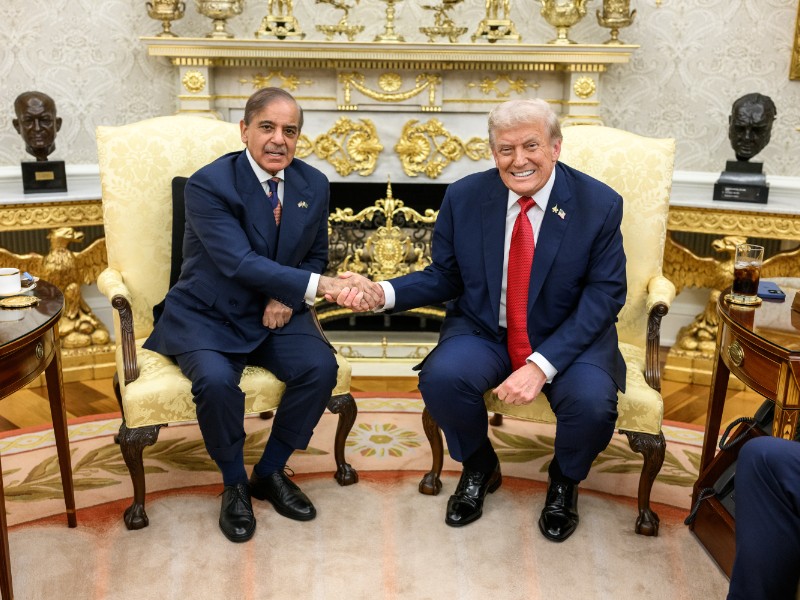
Among the leaders who signed the charter was Pakistani Prime Minister Shehbaz Sharif, who framed Pakistan’s participation as support for a permanent ceasefire in Gaza and the expansion of humanitarian assistance for Palestinians.
A stark contrast with Sharif’s 2020 stance
Sharif’s endorsement of Trump’s initiative marks a striking reversal from his stance five years earlier.
In 2020, when Trump unveiled the “Peace to Prosperity” plan for the Middle East, Sharif—then Leader of the Opposition in Pakistan’s National Assembly—was among its most vocal critics.
At the time, Sharif described the proposal as “unjust, biased and oppressive,” arguing that it legitimised Israeli control over occupied territories.
In a post on X dated January 29, 2020, he accused the plan of endorsing Israeli annexation of Jerusalem and illegal settlements on Palestinian land, asserting that it had been rightly rejected by Palestinians themselves.
Pakistan’s shift triggers domestic political storm
Pakistan’s decision to join the Board of Peace has triggered sharp criticism at home, with opposition parties and public figures questioning both the process and the political implications of the move.
The Pakistan Tehreek-e-Insaf (PTI), led by jailed former prime minister Imran Khan, rejected the government’s decision outright.
In a statement, the party said international commitments of such magnitude required transparency and broad-based political consultation, neither of which had taken place.
PTI also warned that Pakistan’s participation in global peace initiatives should reinforce existing United Nations mechanisms, rather than create parallel structures that could complicate international governance.
The party called on the government to withdraw from the board until a full consultative process is conducted.
Journalists and activists question motives
The decision has also drawn criticism from journalists and civil society voices.
Veteran journalist Zahid Hussain questioned whether Pakistan’s move was driven by a desire to remain in Trump’s favour, describing it as potentially damaging for the country’s foreign policy credibility.
Author and activist Fatima Bhutto criticised Pakistan’s participation in a forum that could include Israel, calling it a moral failure given the scale of suffering in Gaza.
Political activist Ammar Ali Jan also condemned the decision, noting that it was neither debated in parliament nor discussed publicly before being finalised.
At a time when Trump’s foreign policy decisions have drawn global scrutiny, critics argue that Pakistan’s alignment with the Board of Peace reflects a deeper contradiction between its stated support for Palestinian self-determination and its evolving diplomatic calculations.