
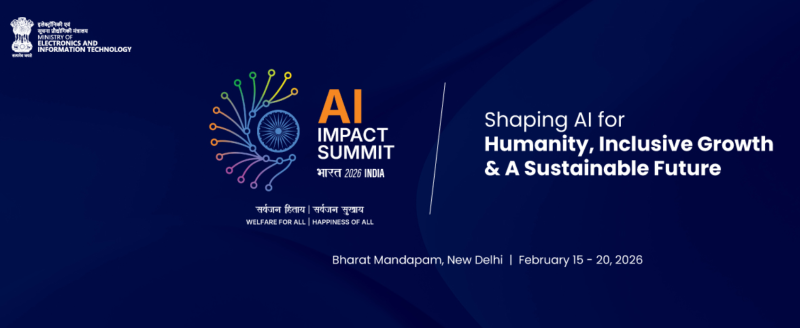
IBNS-CMEDIA: India has sent a formal invitation to China to participate in the Artificial Intelligence (AI) Impact Summit, a major global event scheduled to be held in New Delhi in February.
Responding to a question from The Indian Express during a press briefing on Monday, IT Secretary S. Krishnan confirmed that New Delhi has extended the formal invitation to Beijing.
Sharing details of the Summit, Krishnan, Secretary at the Ministry of Electronics and Information Technology (MeitY), said the event aims to promote the democratisation of AI and bridge the emerging global AI divide.
“What we are seeking to do is ensure the democratisation of AI and bridge the emerging AI divide. A key concern across the international community has been the risk of AI becoming concentrated in a limited number of geographies and controlled by a small set of companies,” he said.
To address this challenge, Krishnan emphasised that AI must be made widely accessible as a horizontal, enabling technology that supports the development of humanity as a whole.
“This means ensuring that countries across the world have access to all critical elements of AI infrastructure such as compute, models, and data,” he said.
He added that broader access would enable countries to develop AI solutions tailored to their specific societal and economic contexts. “Such context-specific solutions can then be deployed across productive sectors including healthcare, agriculture, governance, education, manufacturing, and others, ensuring productivity and efficiency gains are realised at a much wider scale,” Krishnan said.
The AI Impact Summit is anchored in three guiding Sutras—People, Planet, and Progress—which define how AI should serve humanity, safeguard the environment, and drive inclusive economic and social growth.
These Sutras are operationalised through seven thematic Chakras, or Working Groups, which will structure the Summit’s deliberations and outcomes.
According to Krishnan, the Working Group themes have been shaped through months of extensive consultations, including public engagement via the MyGov platform, which received over 600 citizen responses, stakeholder consultations involving more than 500 organisations, and multiple national and international brainstorming sessions held in cities such as Oslo, Tokyo, New York, and Paris.
He further outlined how the Sutra–Chakra framework will guide the Summit’s agenda and outcomes, ensuring discussions move beyond aspiration towards measurable, real-world impact.
As a strategic precursor to the India AI Impact Summit 2026, around 300 pre-Summit events have been organised to gather diverse perspectives and build global momentum. Of these, 57 pre-Summit events have already been held across more than 25 countries.
In addition, a series of Regional AI Impact Conferences are being organised to ensure that India’s AI roadmap remains inclusive and aligned with the aspirations of a Viksit Bharat.